
InStore Music vs Digital Advertising: Which Influences Customers More?
A Data-Backed Look at How Sound and Screens Shape Customer Behaviour Inside Physical Spaces
By
Abhay Tiwari
Published
Jan 28, 2026
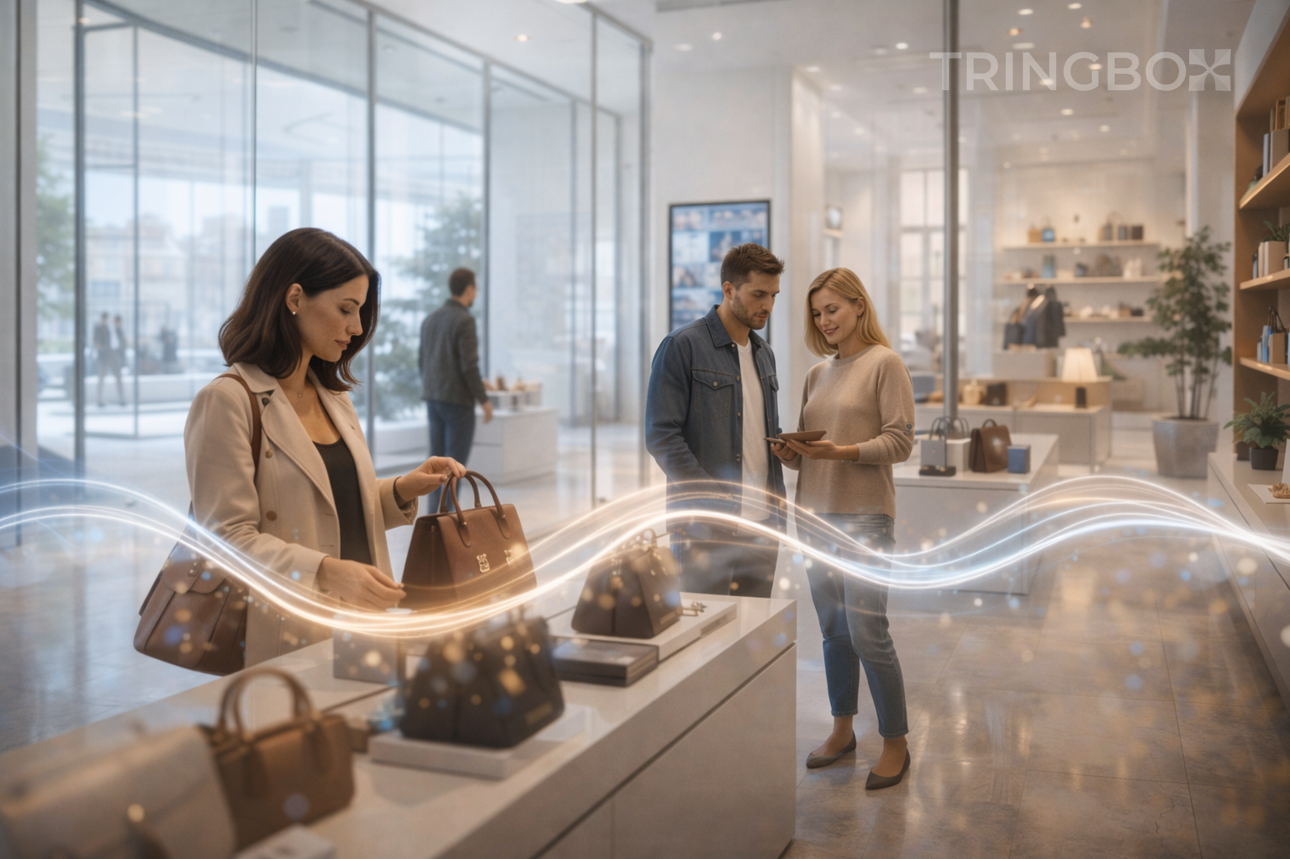
As physical businesses invest more heavily in experience, two tools dominate attention: InStore music and digital advertising screens. Both aim to influence customer behaviour, yet they operate in fundamentally different ways. Digital advertising is visual, explicit, and interruptive. InStore music is subtle, emotional, and continuous. In 2025, businesses increasingly ask a critical question: which one actually influences customers more? This article explores how each medium affects attention, emotion, and decision-making and why sound often outperforms screens in shaping real-world behaviour.
1. The rise of digital advertising inside physical stores
2. How customers actually respond to digital advertising
3. How InStore music influences customers differently
4. Attention versus environment shaping
5. The science of emotional influence
6. Impact on dwell time and movement
7. Cognitive load and decision fatigue
8. When digital advertising works best
9. Why InStore music scales better long term
10. The strongest strategy is not choosing one
11. How Tringbox fits into modern influence strategy
Conclusion
Digital advertising and InStore music serve very different purposes inside physical environments. Screens compete for attention, while music shapes emotion, comfort, and behaviour continuously. In 2025, businesses that rely only on visual messaging miss the deeper influence that sound provides. The most successful spaces treat InStore music as the foundation of experience and use digital advertising selectively within that emotional framework. Intelligent sound platforms like Tringbox do not replace visual communication they make it work better by creating the right emotional conditions for customers to engage, stay, and buy.
Recommended for you
Wiring the Brain for Sales: How AI Soundscapes are Transforming Electronics Retail in 2026
Walk into any premium electronics showroom in 2026. The visual environment is designed to be a futuristic sensory spectacle. Walls are lined with ultra-bright 8K OLED televisions displaying hyper-realistic footage. Sleek, minimalist tables host the latest flagship smartphones, smartwatches, and high-performance gaming laptops. Customers are actively engaging with complex hardware, comparing intricate technical specifications, and making high-stakes financial decisions. But amidst this visual perfection, what does the store actually sound like?
In a space dedicated to cutting-edge technology and innovation, playing a static, compressed top-40 pop playlist from a staff member's personal Spotify account creates an immediate, jarring contradiction. A premium tech brand cannot afford to sound like a chaotic college cafeteria. Furthermore, the acoustic environment of an electronics store is notoriously hostile. It is filled with overlapping audio tracks from TV demo reels, sudden notification chimes from display phones, the loud clatter of mechanical gaming keyboards, and the hum of massive air conditioning units. When retail managers attempt to drown out this noise by simply turning up the volume on standard FM radio or chaotic consumer apps, they trigger massive cognitive overload in their customers, directly killing high-ticket sales.
This critical operational failure is exactly why the world’s leading consumer electronics brands are deploying Tringbox. By treating audio not as background noise, but as a dynamic software layer, retailers are completely re-engineering the customer experience. If you want to understand the deep technical frameworks driving this industry shift, you can read our foundational industry report on Electronic Retail Audio Intelligence in 2026. In this comprehensive guide, we will explore the psychology of the high-tech purchase, the neuroscientific impact of intelligent sound design, and why deploying specialized Electronics Store Music powered by Agentic AI is the ultimate upgrade for your showroom floor.
The Retail Renaissance: A Blueprint for Opening a Clothing Store in 2026
For the last decade, industry analysts aggressively predicted the 'retail apocalypse,' claiming that e-commerce would entirely eradicate the brick-and-mortar clothing store. As we navigate through 2026, the reality is strikingly different. Physical retail is not dead; boring, transactional retail is dead. Today, opening a successful clothing store is no longer about stacking as much inventory onto the floor as possible. The modern apparel boutique has evolved into an immersive, multi-sensory brand sanctuary. Customers can buy clothes online with a single click; they visit your physical storefront because they want to experience the lifestyle, aesthetic, and emotional resonance of your brand.
If you are planning to open a clothing store in 2026, your business plan must look radically different from the retail models of 2019. From integrating invisible 'phygital' technology to mastering the psychoacoustics of the fitting room, your showroom must be engineered for high-value human experiences. In this comprehensive guide, we will break down the crucial shifts in modern apparel retail, how to design an environment that converts foot traffic into loyal brand advocates, and why integrating intelligent infrastructure like Tringbox is the ultimate foundation for your new venture.
Styling the Perfect Ambience: The Science of Clothing Store Music in 2026
When a customer steps into your clothing boutique, they are looking for more than just fabric—they are looking for a sanctuary of self-expression. In 2026, the visual aesthetics of a fashion store are only half the equation. The auditory environment is what truly dictates the shopper's journey, their emotional state, and ultimately, their purchasing behavior. A disorganized, chaotic playlist or a silent, sterile sales floor can instantly break the illusion of style, causing shoppers to leave empty-handed. However, when audio is scientifically engineered to match the energy of the room, it acts as an invisible stylist, boosting confidence and encouraging exploration. This is why leading apparel brands are turning to Tringbox's Clothing Store Music. By combining retail psychology with real-time data, our Agentic AI creates a dynamic, high-fidelity soundscape that reflects your brand's unique positioning. Whether you are managing an established franchise or just starting out—as detailed in our 2026 Guide to Opening a Clothing Store—mastering your store's acoustic environment is the ultimate key to retail excellence.
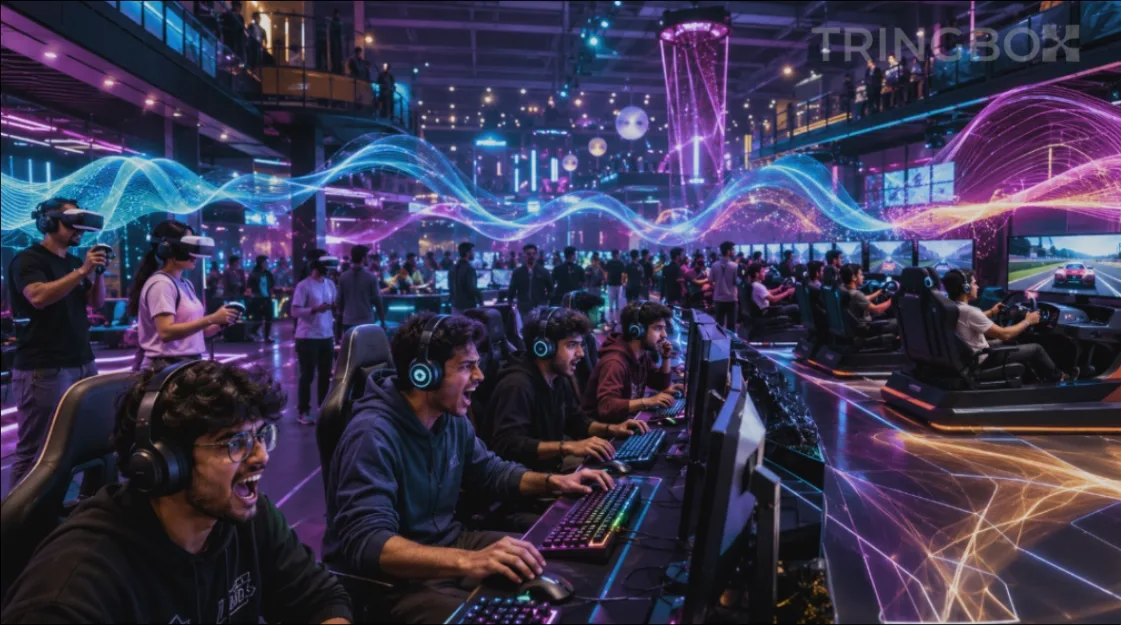
Level Up the Energy: Why Indian Gaming Zones Need AI Soundscapes in 2026
Imagine walking into a massive, multi-level gaming arena inside a premium Indian mall on a Saturday evening. The sensory input is immediately overwhelming. Bowling pins are crashing loudly in the background, VR simulator hydraulics are hissing, ticket dispensers are whirring, and hundreds of college students and corporate teams are shouting over air hockey tables. It is an environment built on high adrenaline. To manage this intense acoustic environment, most Indian gaming zone operators simply plug an aux cable into a smartphone, open a personal streaming app, and blast a random EDM playlist or a heavy Punjabi pop mix at maximum volume. They believe that louder music equals higher energy. However, in 2026, neuro-acoustic science tells us a completely different story. Instead of creating an immersive, adrenaline-pumping experience, this outdated approach creates what acoustic engineers call 'sensory overload'—or, in simpler terms, a chaotic fish market. When background music clashes violently with the mechanical noise of arcade cabinets, it triggers rapid cognitive fatigue. Parents waiting for their kids get headaches and want to leave early. Gamers feel exhausted faster, cutting their play sessions short. Consequently, they leave before swiping their cards for that crucial second or third recharge. In the highly competitive Indian entertainment industry, extending customer dwell time is the direct key to profitability. This is exactly why the most successful arcade and entertainment hubs are abandoning manual playlists and upgrading to intelligent, autonomous systems like Tringbox. By deploying specialized Gaming Zone Music powered by Agentic AI, owners are systematically engineering their venues to maximize immersion, manage crowd flow, and legally protect their businesses. Here is a deep dive into the psychology of arcade audio, the operational realities of Indian gaming zones, and how AI sound design is driving massive ROI.
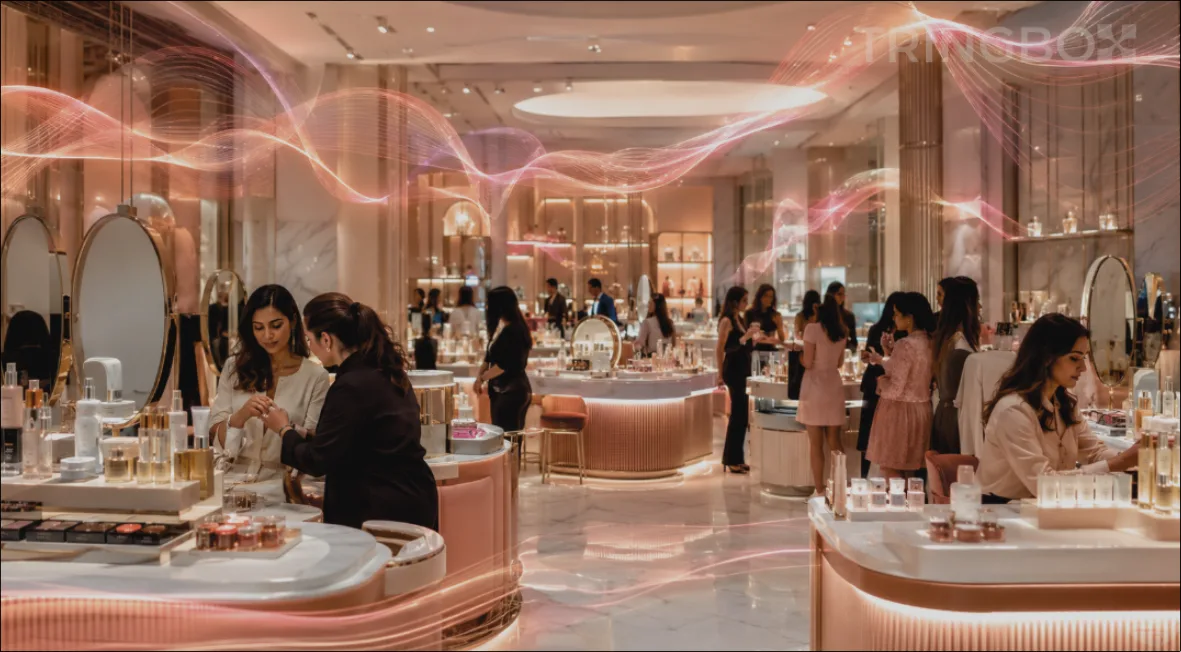
Enhancing the Glow: How AI Soundscapes are Redefining the Cosmetic Retail Experience
Walk into a premium beauty lounge, a high-end makeup boutique, or an artisanal fragrance gallery in 2026. The visual aesthetics are undeniably immaculate—flattering halo lighting, gleaming marble display counters, and perfectly arranged swatching stations. But what are your customers actually hearing? If the background audio consists of a chaotic, ad-supported top-40 radio station or an aggressive electronic playlist hastily patched together by a floor manager, the entire luxurious illusion shatters instantly. In the beauty and cosmetics industry, the shopping experience is inherently intimate, highly vulnerable, and deeply emotional. Customers crossing your threshold are not merely purchasing a vial of serum or a new shade of lipstick; they are investing in self-care, personal confidence, and identity. Every single sensory touchpoint within your retail environment must align flawlessly to make them feel pampered, secure, and beautiful.
The retail 'mirror moment'—that highly vulnerable split-second when a customer applies a tester product and critically evaluates their reflection—is the exact point where a high-ticket sale is either won or lost. Groundbreaking neuro-acoustic research has demonstrated that the background audio playing during this specific moment directly alters how a human being perceives their own facial features. If your store sounds stressful, chaotic, or fatigued, your customers will subconsciously project that stress onto their reflection, and no amount of luxury skincare can mask that psychological discomfort.
This is precisely why leading global cosmetic retailers have completely abandoned static playlists and manual audio curation. Instead, they are integrating Tringbox—an intelligent, autonomous Agentic AI audio engine that reads the store’s live environmental data and generates the perfect auditory atmosphere in real-time. In this comprehensive industry breakdown, we will explore the fascinating intersection of psychoacoustics and beauty, how music scientifically alters the perception of scent, and why deploying Tringbox’s Cosmetic Store Music is the ultimate competitive advantage for modern beauty brands.

Moving Beyond Pilots: Why AI Audio Must Become Your Retail Operating System Before NRF Nexus 2026
As retail leaders look toward NRF Nexus 2026, the industry's mandate is clear: artificial intelligence must move beyond isolated pilot programs and become integrated into core business functions. Today, retailers are leveraging AI to dynamically adjust pricing, manage inventory, and guide customer service—often influencing decisions in real time. Yet, despite this push to modernize retail infrastructure and connect new tools to existing systems, the auditory environment of physical stores frequently remains stuck in the past. To achieve true unified commerce, every aspect of the store must be data-driven. Tringbox transforms in-store audio from a manual afterthought into a scalable Agentic AI operating system, ensuring your brand's sensory infrastructure responds instantly to real-time data while guaranteeing absolute copyright compliance.
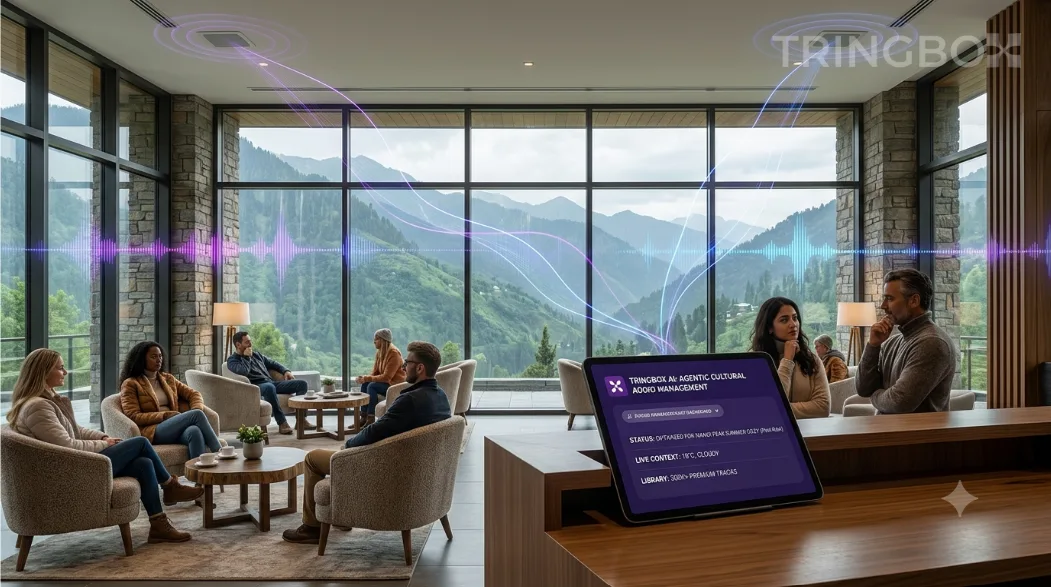
Scaling Hospitality to the Hills: Why Emerging Indian Markets Need Context-Aware Audio
The Indian hospitality sector is rapidly shifting its focus from saturated metros to emerging regional destinations. Just this week, in early June 2026, major players like IHG Hotels & Resorts announced significant expansions, including a new Holiday Inn in Mandi, Himachal Pradesh. As global and national brands scale into the hills and tier-3 cities, they face a unique challenge: a generic, corporate lobby playlist that works in Mumbai feels entirely out of place in a serene mountain retreat. To capture the authentic local essence while maintaining brand standards, operators are turning to Tringbox. Our Agentic AI in-store music engine provides localized, context-aware soundscapes that perfectly match the regional vibe without requiring manual curation.
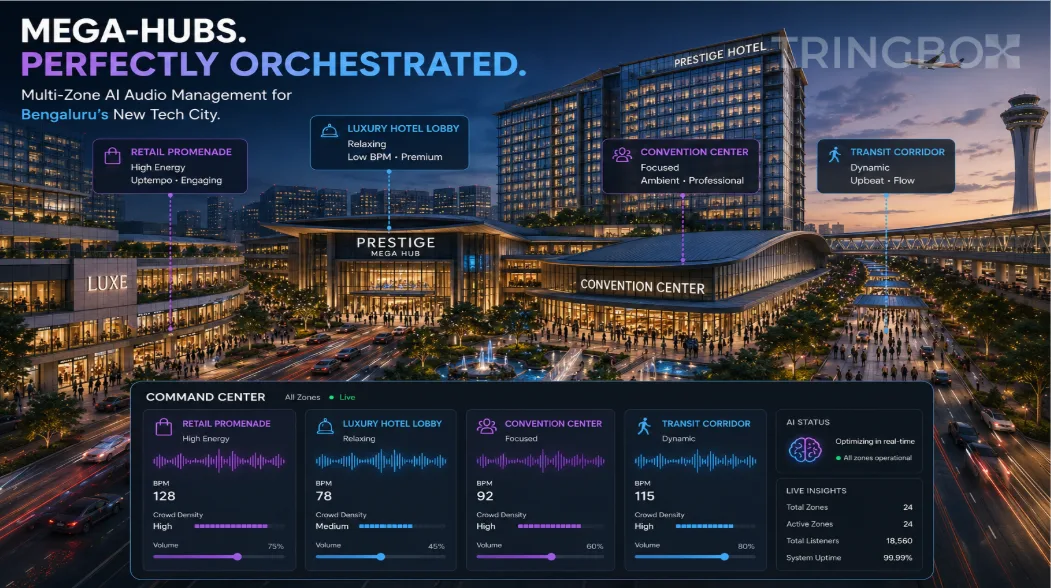
The Mega-Hub Challenge: Automating Atmosphere Across Bengaluru's New Tech City
Commercial real estate in India is scaling to unprecedented heights. On June 11, 2026, Prestige Group and BACL announced a colossal ₹1,800 crore, 1.5 million sq ft integrated convention and hospitality hub near the Bengaluru airport. Mega-developments like this—housing luxury hotels, retail spaces, and performing arts centers—present a massive logistical hurdle: how do you manage the auditory atmosphere across dozens of distinct zones simultaneously? Relying on human staff to manually adjust the vibe across a sprawling campus is impossible. Tringbox provides the solution with an Agentic AI music engine capable of managing complex, multi-zone sensory environments autonomously.
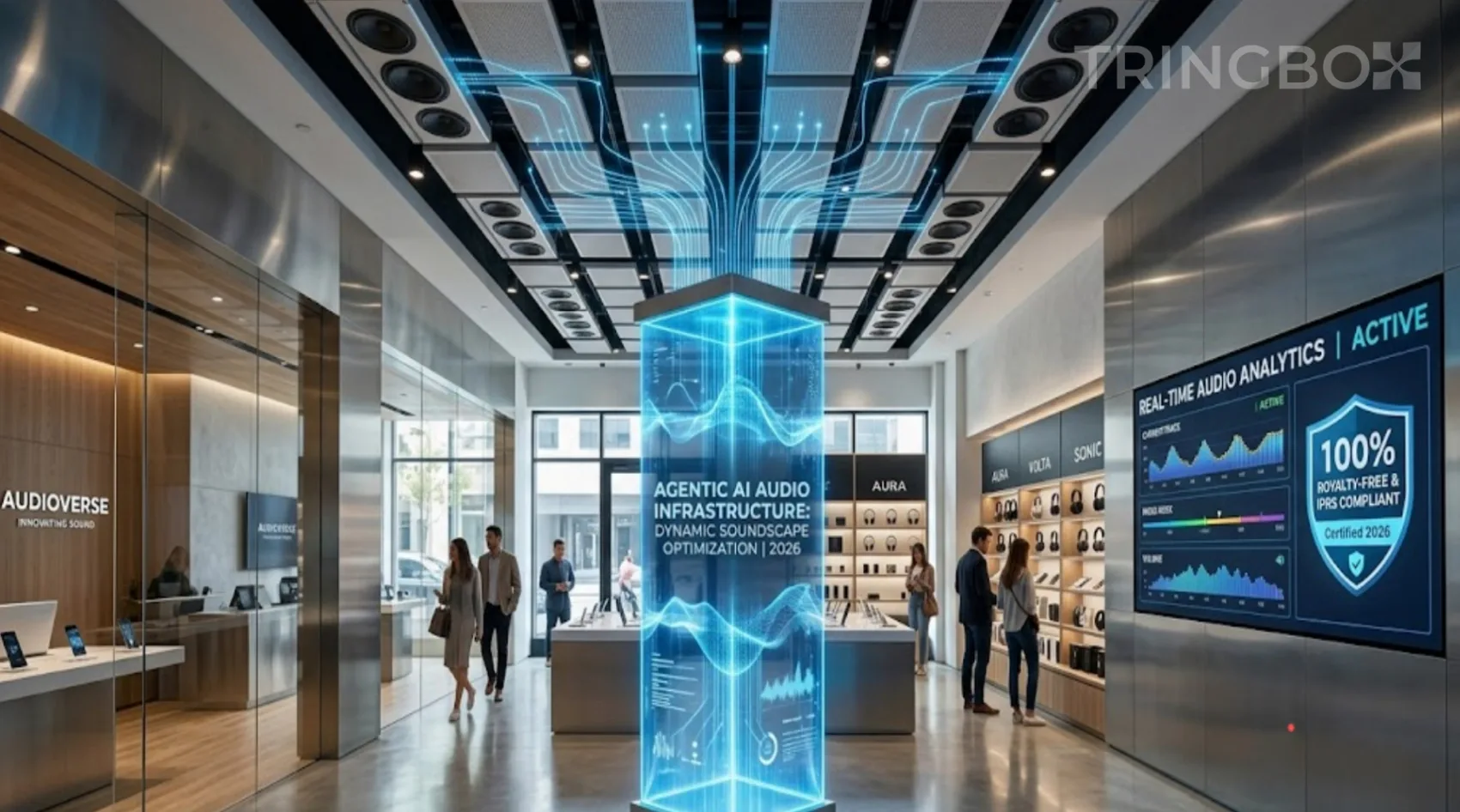
The AI Infrastructure Wave: Why Retailers Must Modernize In-Store Audio Following the Largest Tech IPO in History
Today, on June 12, 2026, the technology landscape reached a historic milestone. SpaceX opened on the Nasdaq in what is officially the largest IPO in history, raising $75 billion at a staggering post-money valuation of $1.75 trillion. This unprecedented event serves as the ultimate market test, confirming that institutional capital is fully committing to the future of AI infrastructure. For enterprise retail leaders, the message is undeniable: the foundational technology powering physical operations must evolve. While massive investments are pouring into digital logistics and visual retail analytics, the auditory layer of the store often remains trapped in the past. Tringbox is bridging this gap by providing an advanced Agentic AI audio ecosystem. By replacing vulnerable, manual music curation with a hyper-intelligent, royalty-free cloud infrastructure, Tringbox equips modern retailers to deliver seamless sensory experiences that match the ambition of 2026's tech boom.
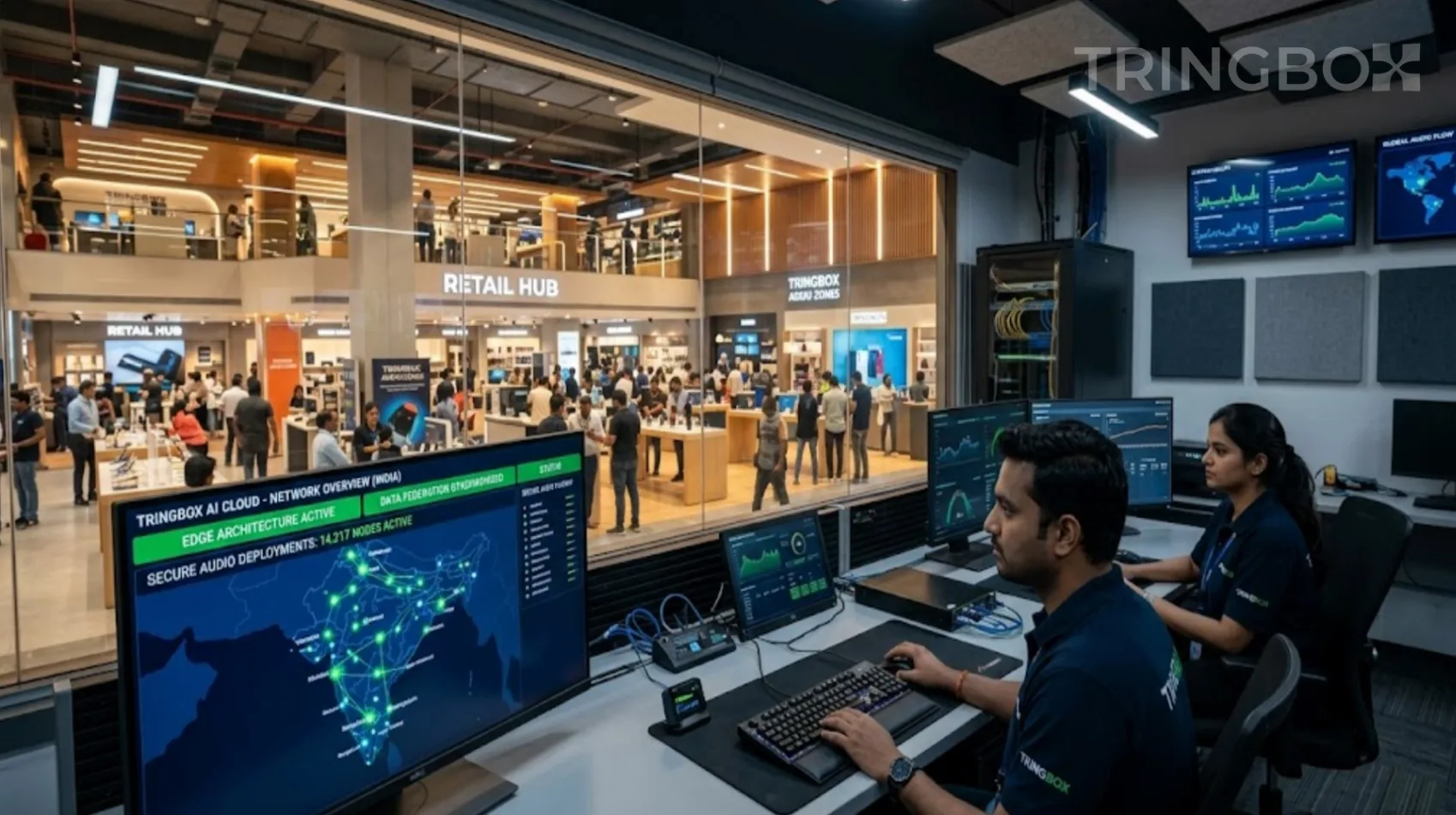
Secure Audio Scaling: How Data Federation is Shaping the Future of Retail Ambiance in India
As digital transformation accelerates across India, enterprise security and intelligent data management have become paramount. Today, June 12, 2026, SAP underscored this reality by launching its newest data center in Mumbai to dramatically strengthen data federation capabilities. By allowing disparate data sources to be unified without physically moving or copying the data, federation ensures that mission-critical operational processes can scale globally while preserving data integrity and security. This same enterprise-grade philosophy is desperately needed in the realm of physical retail ambiance. Managing the auditory environment across hundreds of store locations typically involves insecure local media players or illegal personal streaming apps that threaten corporate IT networks. Tringbox revolutionizes this process. Utilizing a cloud-native, edge-powered architecture, Tringbox securely deploys Agentic AI and a massive library of royalty-free music, ensuring that your sensory infrastructure scales perfectly without compromising corporate security.