
Static, Scams, and Competitor Ads: Why Using FM Radio in Your Shop is a Fatal Operational Mistake in 2026
A deep-dive analysis into the psychological, strategic, and financial liabilities of traditional terrestrial radio broadcasts in modern brick-and-mortar retail spaces.
By
Aditya Kumar
Published
Jun 5, 2026
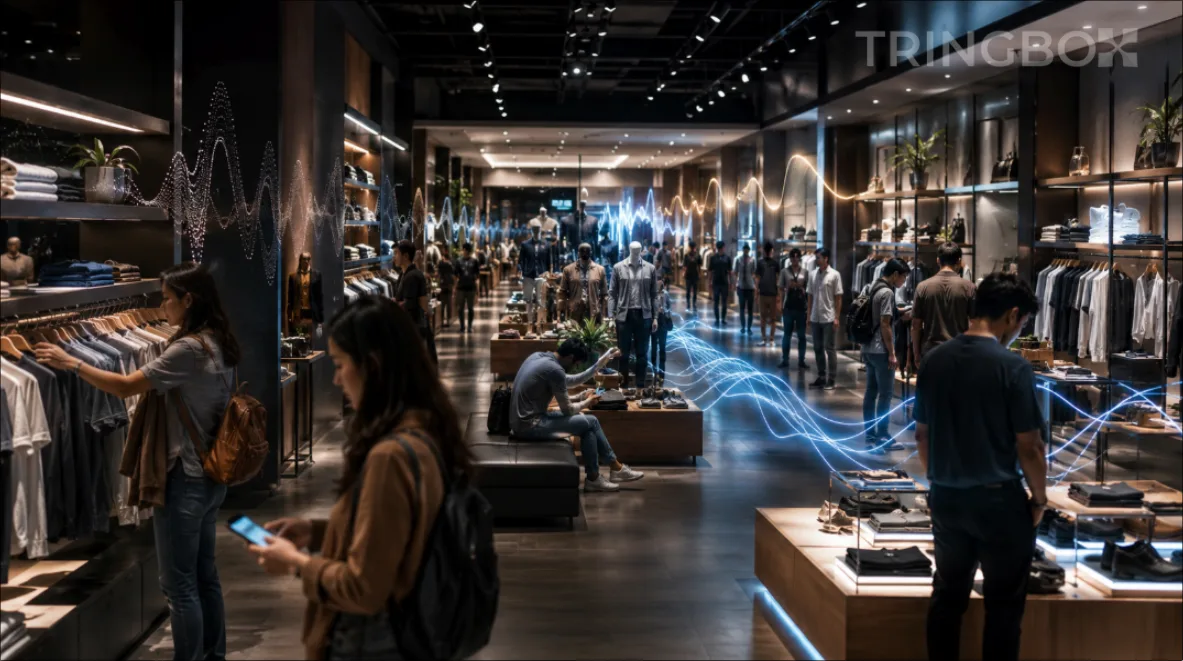
Walk into a neighborhood grocery store, a local hardware showroom, or an independent high-street fashion boutique, and you will still occasionally catch the faint crackle of a local FM radio station playing over the ceiling speakers. For decades, traditional terrestrial radio was viewed by small business owners as a victimless shortcut—a friction-free, zero-cost utility to fill empty air and drown out dead silence. However, as we cross into the midpoint of 2026, the retail environment has radically consolidated around highly optimized customer experiences. In this hyper-competitive landscape, relying on broadcast radio in a commercial space is no longer just a lazy atmospheric choice; it is an active operational hazard that drives away your customer base, shatters your checkout lines, and exposes your balance sheet to aggressive statutory legal penalties.
1. The Competitor Advertising Loophole: Funding Your Own Downfall
2. Cognitive Dissociation and Sensory Whiplash
3. The 2026 Legal Landscape: The Automated Trap of Public Performance Licensing
4. Complete Disconnection From Real-Time Environmental Context
5. The Visual and Demographic Disconnect of Shock Jocks
6. Technical Antiquation: Low Fidelity and Interference
Conclusion
The verdict for 2026 is absolute: relying on traditional terrestrial radio to soundtrack a commercial retail enterprise is an obsolete practice that introduces unnecessary operational, strategic, and legal vulnerabilities. Your store's soundscape should never be left to chance, and it should certainly never be weaponized by local competitors' commercial ads. Forward-thinking retailers are completely removing radio tuners from their audio racks and deploying Tringbox InStore AI Music. By replacing blind, commercial-heavy broadcasts with an autonomous, fully licensed, and context-aware agentic audio engine, Tringbox ensures that your background audio transforms from a dangerous operational liability into a highly optimized driver of retail revenue.
Recommended for you
The Sustainable Audio Digital Twin: Automating Facility Management Without the Environmental Toll
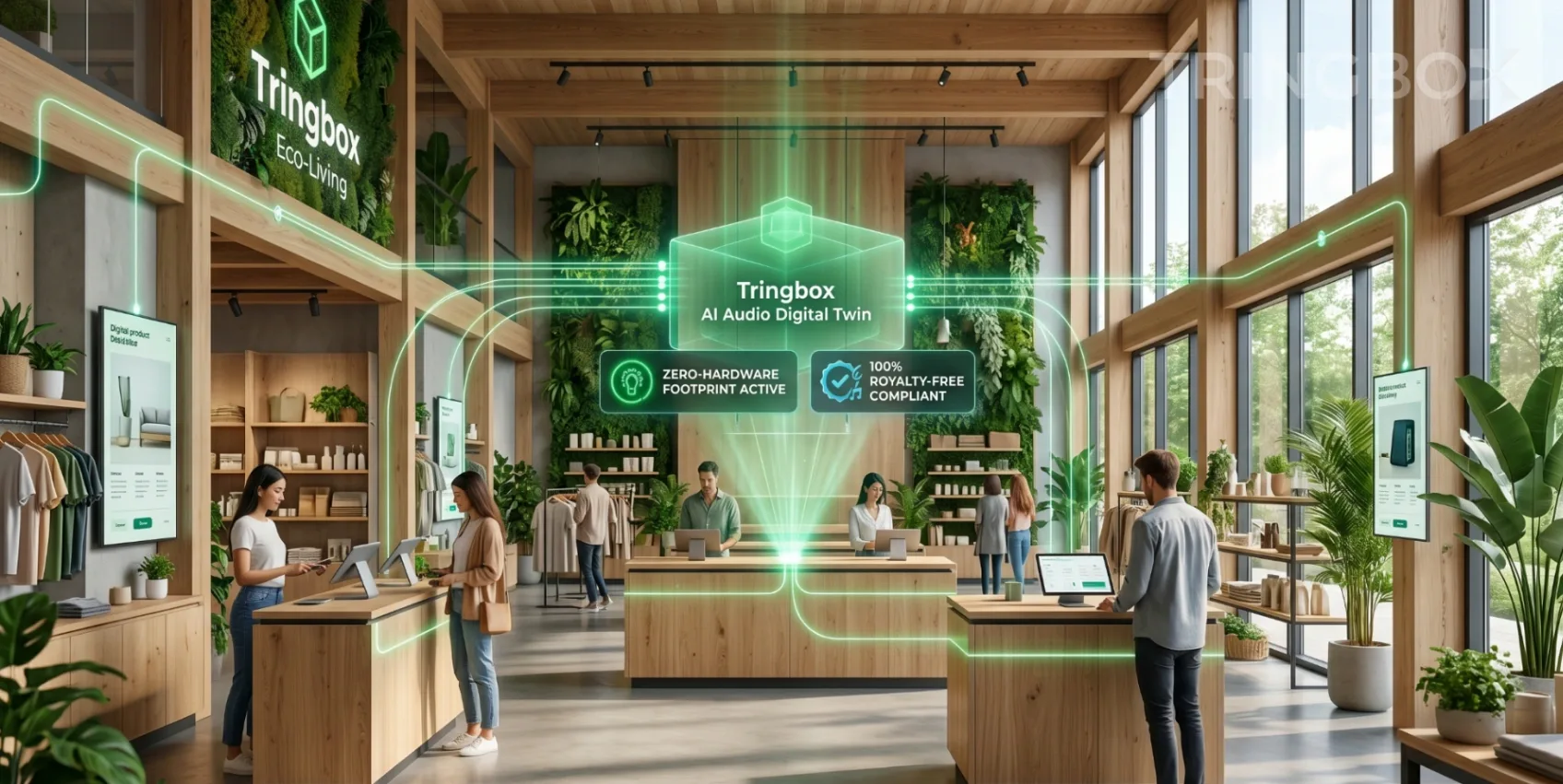
Today, on June 11, 2026, the integration of artificial intelligence into physical spaces took a massive leap forward. Ricoh announced a new AI orchestration co-creation initiative with Thread AI, designed to advance and automate facility-management operations in Japan. This initiative combines digital-twin capabilities with multimodal AI and workflow orchestration to optimize physical environments. However, as AI automation scales across the enterprise, so does its planetary footprint. A newly published UN study warns that data centres powering AI could consume 945 terawatt-hours of electricity annually by 2030. For enterprise retailers looking to deploy AI-driven sensory infrastructure, balancing technological advancement with environmental responsibility is paramount. Tringbox addresses this dual challenge by providing a sustainable, cloud-native Agentic AI that curates 100% royalty-free in-store audio without the need for energy-draining, proprietary on-site hardware.
Winning the 2026 Value-Seeking Consumer: Why In-Store Atmosphere is the Ultimate Differentiator
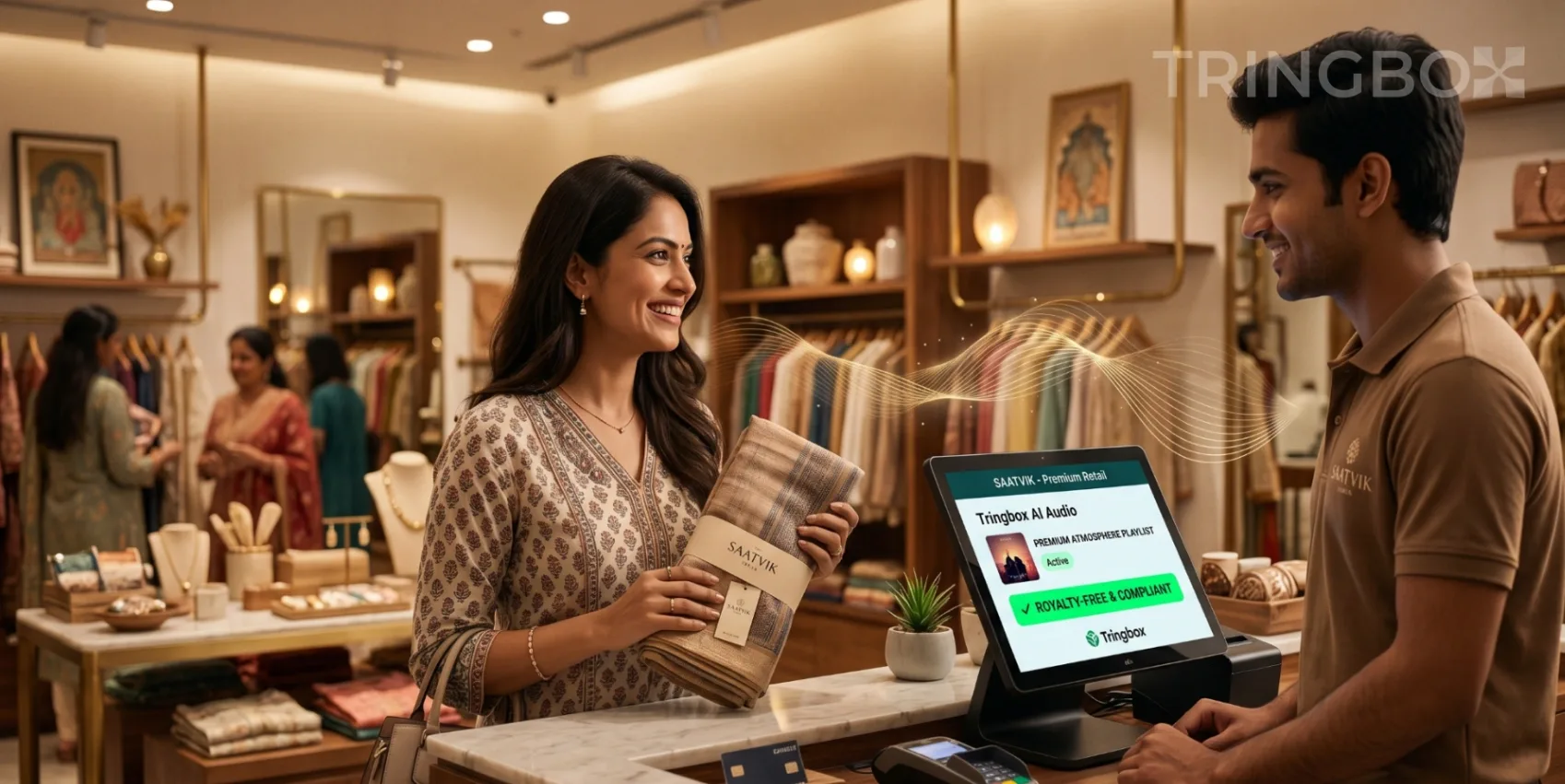
As we navigate June 2026, the retail industry is confronting a profound structural shift toward value-seeking behaviors as consumers deeply contemplate what constitutes a fair price. In fact, four in 10 Americans now demonstrate deal-driven or cost-conscious habits, prompting nearly seven in 10 retail executives to agree that these changes are permanent. However, simply slashing prices is not the answer. To maintain margins and secure customer loyalty, leading brands must focus on the physical experience. Research highlights that as much as 40% of consumer perceptions of a brand's value stems from factors entirely other than price, such as quality, customer service, and the overarching store atmosphere. Tringbox’s Agentic AI audio ecosystem empowers retailers to effortlessly elevate this atmospheric value, delivering a completely automated, legally compliant, and premium auditory environment that keeps shoppers engaged.
Brewing the Perfect Vibe: Why Your Cafe and Restaurant Need AI Music Software in 2026
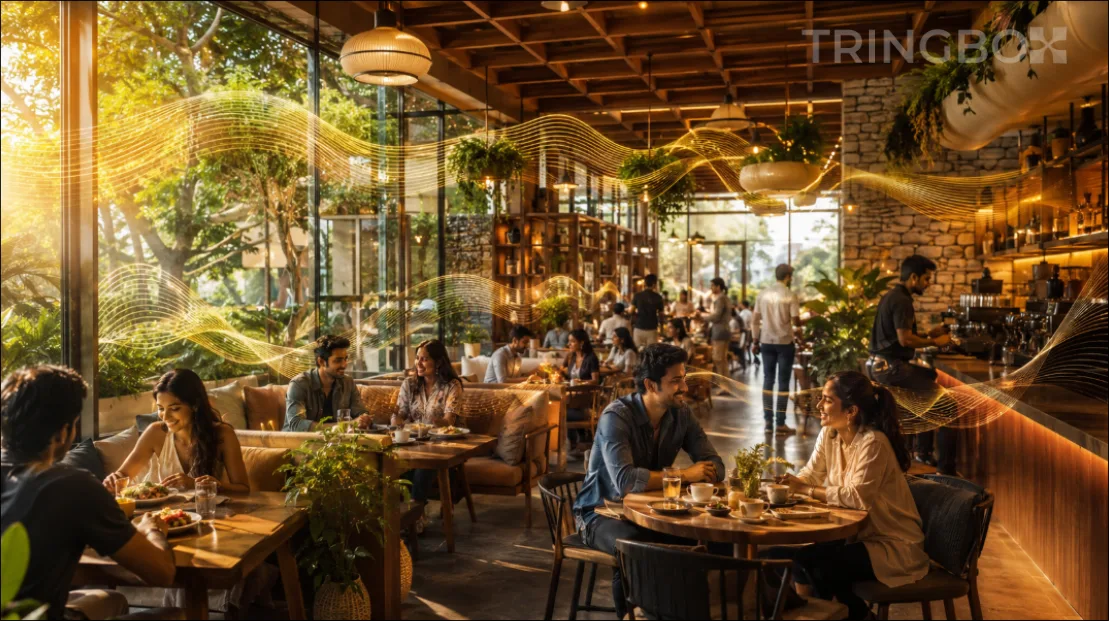
Walk into any bustling neighborhood cafe or premium casual dining restaurant in 2026, and you will immediately notice a distinct pattern. The venues that command a fiercely loyal following—the ones where remote workers linger for hours and friends share endless conversations over dinner—share one invisible, highly optimized asset: a flawlessly engineered acoustic environment. Historically, hospitality operators relied on basic cafe playlist software or random personal music streaming apps to simply fill the dead air and drown out the noise of espresso machines. However, as consumer expectations have evolved in the post-digital era, simply playing background noise is no longer sufficient. Two cafes can serve the exact same high-quality specialty coffee, at the identical price point, on the very same street, yet one thrives as a vibrant social sanctuary while the other struggles with a cold atmosphere and high customer churn. The defining differentiator is sensory design. Music is not just an aesthetic decoration; it is a profound psychological tool that regulates the human nervous system, alters heart rates, and directly impacts consumer spending habits. If your business is still relying on static, repetitive playlists, you are actively leaking revenue. Today, advanced restaurant music software powered by autonomous Agentic AI is completely transforming the hospitality industry. It bridges the critical gap between interior design and behavioral science. In this comprehensive guide, we will explore exactly why traditional manual playlists fail, how neuro-acoustics actively influence dining behavior, and why Tringbox is the definitive, industry-leading solution for engineering the perfect hospitality vibe.

Beyond the Pen Drive: Why Your Indian Jewellery Showroom Needs AI Music in 2026
Picture this: A family walks into your flagship jewellery showroom. They are here for bridal shopping—an emotional, high-stakes purchase that will likely span several hours and run into lakhs, if not crores, of rupees. Your showroom is immaculate. The central air conditioning provides instant relief from the Indian summer. The warm, focused LED lighting makes the Kundan and Polki sets sparkle flawlessly on the velvet trays. You have served them premium coffee and bottled water. But what are they listening to? Is it a local FM radio station suddenly blasting a loud, chaotic advertisement for a rival jeweller down the street? Is it a staff member’s personal YouTube playlist interrupting the mood with a jarring ad? Or perhaps it is the same worn-out pen drive playing the exact same instrumental flute cover of a 90s Bollywood song on an endless, fatiguing loop? In the Indian jewellery business, trust, heritage, and perceived value are everything. When a customer is evaluating a high-ticket diamond necklace or heavy gold bridal wear, every single sensory detail in your showroom must scream 'luxury.' If your background audio sounds cheap, chaotic, or repetitive, it subconsciously degrades the perceived value of your merchandise. In 2026, the most successful jewellers in India are abandoning manual playlists and risky consumer streaming apps. They are upgrading their sonic branding using autonomous Agentic AI. Here is a deep dive into why traditional music management is hurting your showroom’s conversion rates, how neuro-acoustics influence high-ticket Indian buyers, and why Tringbox is the ultimate digital asset for the modern Indian jeweller.
The Silent Resignation: How Bad Audio is Driving Retail Staff Away in 2026
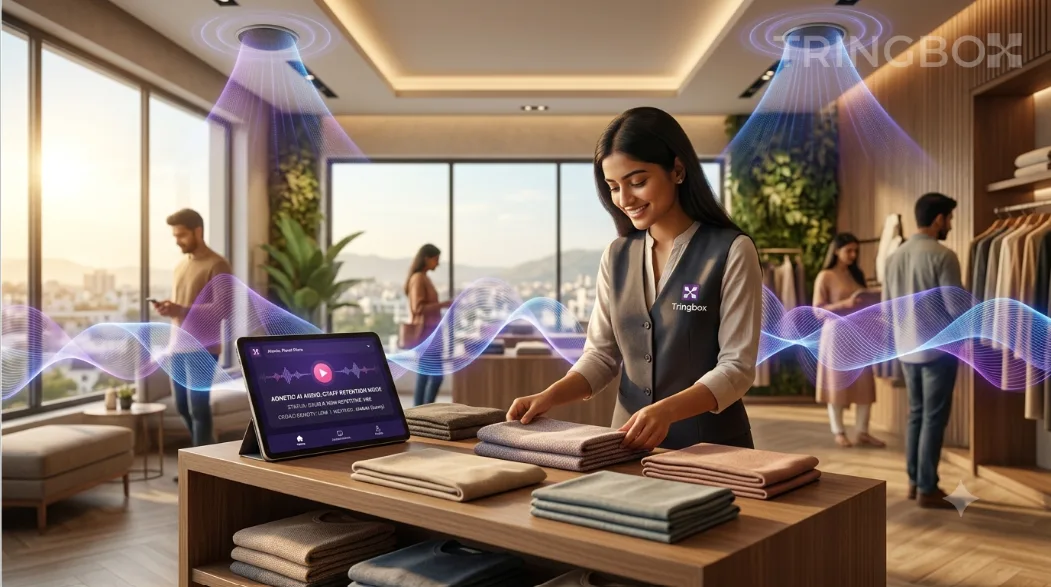
In 2026, the retail and hospitality industries are facing a historic workforce crisis. With annual employee turnover rates hovering near 80%, operators are desperately throwing money at signing bonuses, wellness programs, and flexible scheduling to retain their floor staff. However, one of the most insidious causes of employee burnout is completely invisible: audio fatigue. Working an eight-hour shift while subjected to the same repetitive, high-energy, 40-song FM radio loop creates severe cognitive load and psychological stress. Tringbox is tackling this workforce crisis from a completely different angle by deploying Agentic AI that creates dynamic, non-repetitive soundscapes, fundamentally improving the daily working environment for your team.
The Agentic Commerce Era: Aligning Your In-Store Audio with June 2026's AI Retail Boom
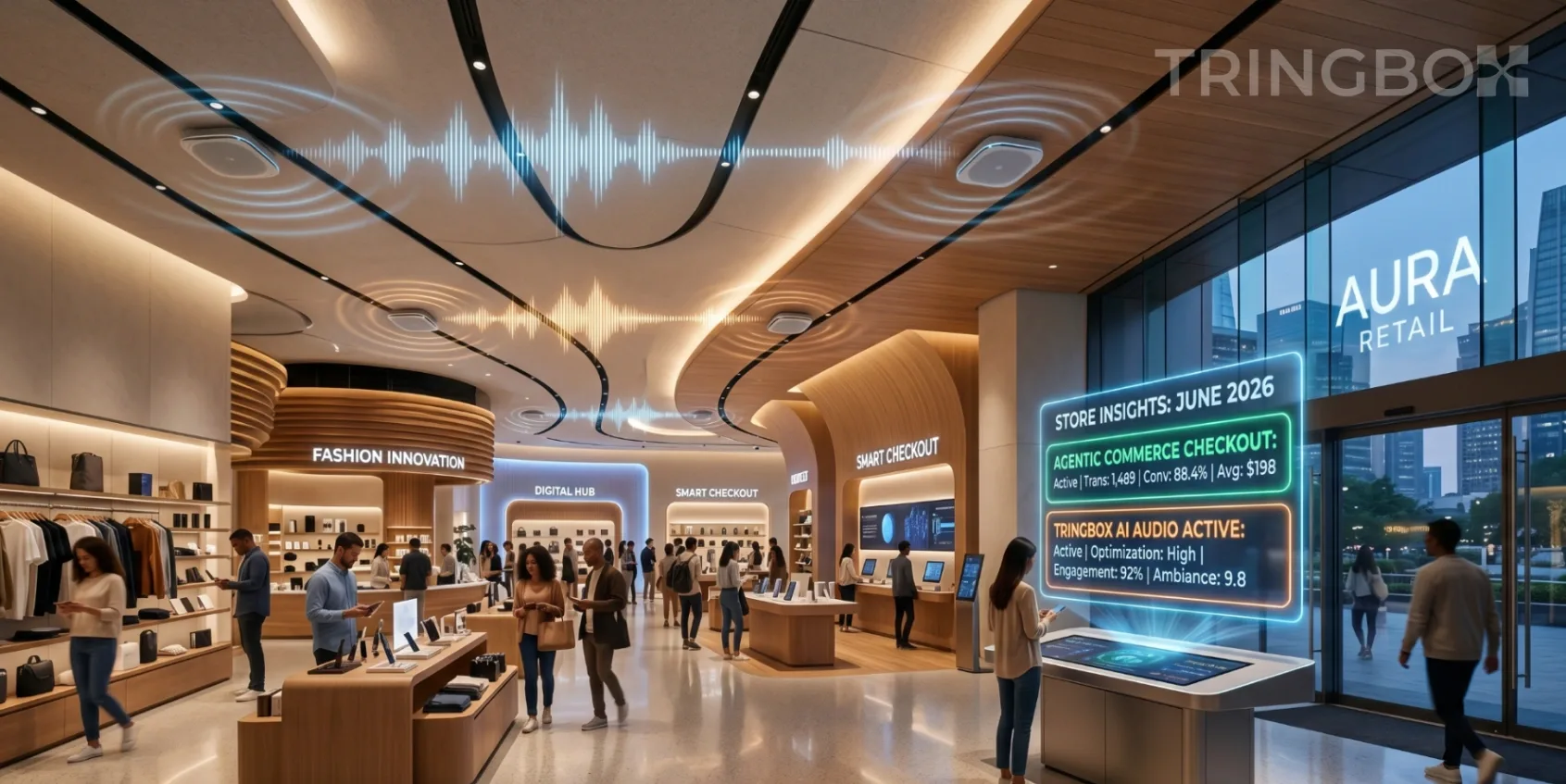
The retail landscape in June 2026 is undergoing a radical transformation as conversational and agentic commerce take center stage. Online shopping experiences are being entirely redefined by autonomous systems, leaving physical stores scrambling to match this level of technological sophistication. Concurrently, the artificial intelligence (AI) in music market size is expanding rapidly, projected to grow from $4.48 billion in 2025 to $5.55 billion in 2026. For retail brands, this creates an urgent mandate: your physical stores must leverage AI to remain competitive, but they must do so legally and strategically. Tringbox’s Agentic AI audio ecosystem is the definitive solution. By bridging the gap between advanced AI curation and a 100% royalty-free music library, Tringbox ensures your in-store auditory experience is as seamless and intelligent as the new digital protocols shaping the market.
The 2026 Phygital Shift: Bridging the Digital-Physical Divide with Agentic AI Soundscapes
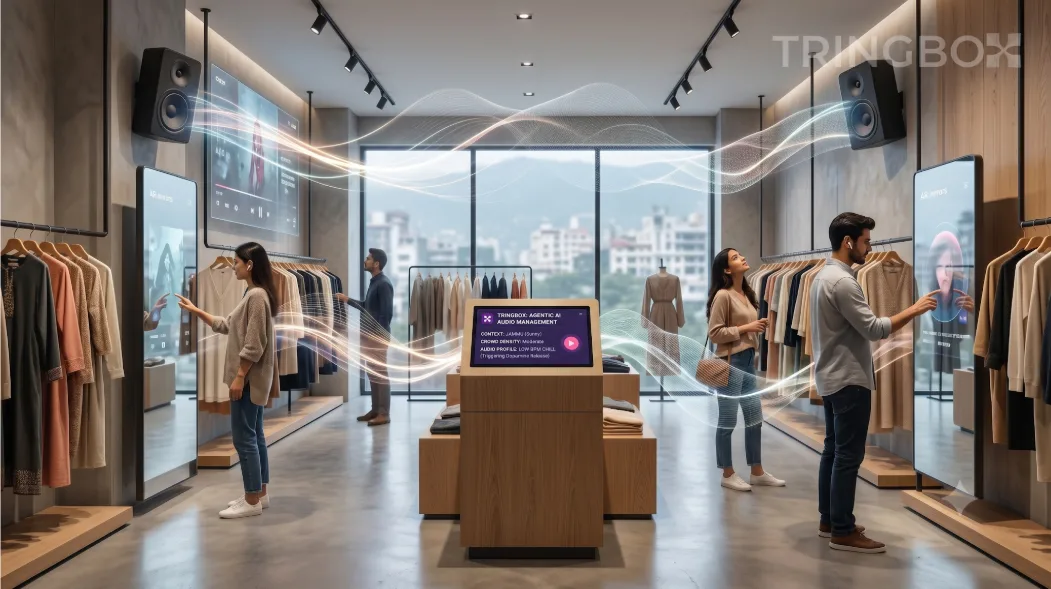
The biggest buzzword in 2026 retail strategy is 'phygital'—the seamless integration of physical environments with digital intelligence. Consumers expect the same level of personalization and responsiveness in a brick-and-mortar store as they do on a smart e-commerce platform. However, while brands invest heavily in AR mirrors and endless-aisle touchscreens, many neglect the most fundamental atmospheric element: sound. To truly achieve a phygital environment, the store's audio cannot be a static, dumb playlist. Tringbox bridges this gap by deploying Agentic AI that transforms your venue's background music into an active, responsive digital layer.
Human Authenticity Meets AI Precision: The Future of In-Store Music in 2026
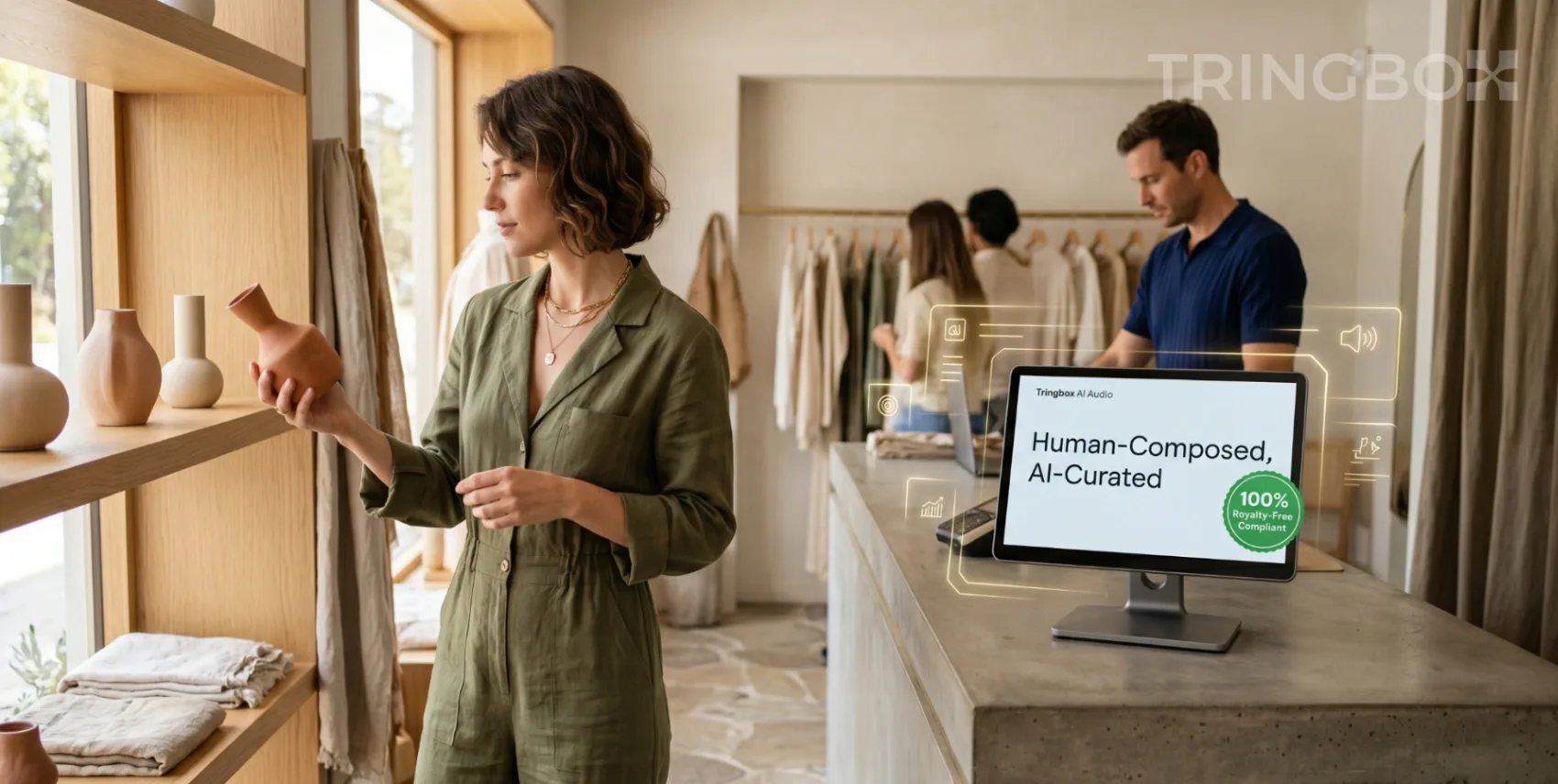
A central debate continues to define the music and retail industries in June 2026: how should artificial intelligence be integrated into the auditory experience? While fully generated synthetic music is expanding, it is becoming clear that consumers ultimately reject purely machine-made soundscapes in favor of genuine artistry. On June 5, 2026, Sir Lucian Grainge, chair and CEO of Universal Music Group, spoke at the Northeastern Global Leadership Summit in London, providing a definitive answer. He noted that audiences want to hear music that emerges from a creative human mind, but emphasized that AI has the power to enrich that experience. Tringbox embraces this exact philosophy for the retail sector. Rather than broadcasting cold, fully AI-generated tracks that alienate shoppers, Tringbox uses sophisticated Agentic AI to flawlessly curate, balance, and distribute a premium library of 300,000 royalty-free, human-composed tracks.
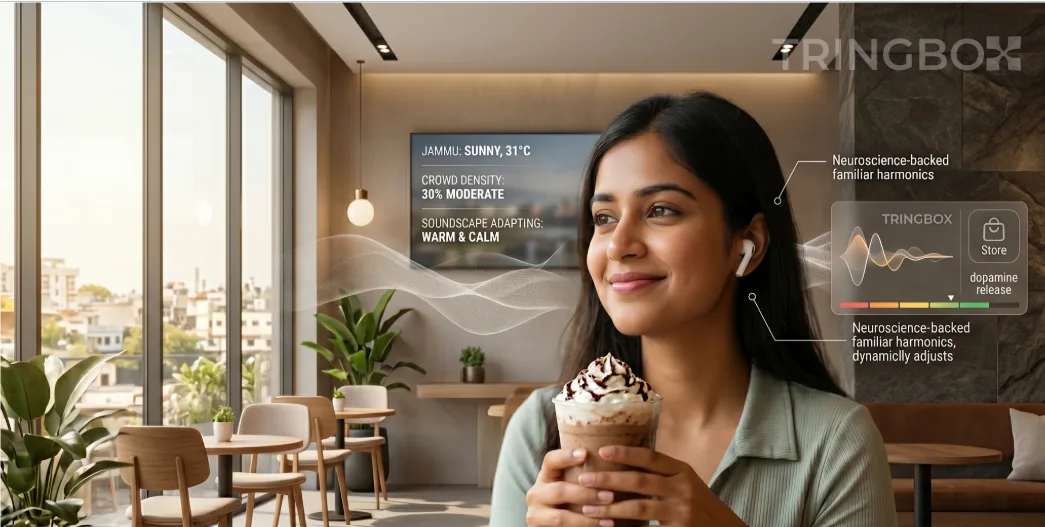
Leveraging 'Treatonomics' in 2026: How AI Music Turns Small Purchases into Premium Experiences
In 2026, economic volatility and shifting life milestones have given rise to "Treatonomics" or "little treat culture." Consumers are actively seeking out small, everyday pleasures to inject optimism and control into their lives. Whether it's ordering a hot mocha frappe at a local cafe, picking up a premium Vitamin C skincare serum, or simply enjoying a quick chicken-filled wrap, the purchase is less about the item and more about the joy it brings. For retailers and hospitality venues, capturing this audience means creating an environment that feels like a genuine escape. This is where Tringbox's Agentic AI music engine steps in, transforming standard commercial venues into immersive sanctuaries of joy.
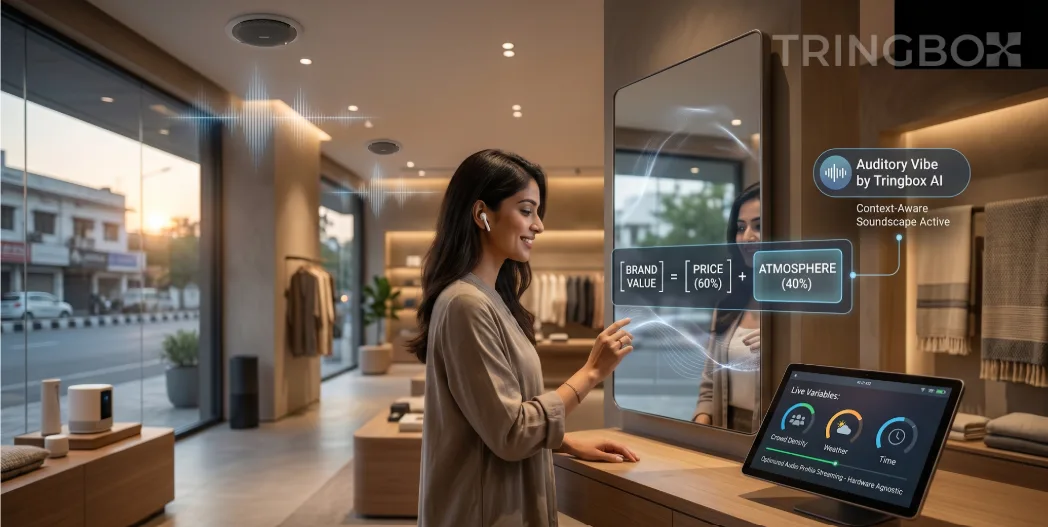
The 2026 Value Shift: Why 40% of Your Brand's Worth is Now Tied to Atmosphere
In 2026, retailers are facing a structural shift toward value-seeking behaviors, with consumers across all income levels paying closer attention to price. However, competing in this new era requires more than just slashing prices. Research from 2026 shows that as much as 40% of consumer perceptions of a brand's value stems from factors other than price, such as quality, customer service, ease of checkout, and the overall in-store atmosphere. To justify premium price points and build loyalty, brands must elevate the sensory experience of their physical spaces. Tringbox provides the ultimate tool for this: an autonomous, AI-driven audio layer that instantly boosts a venue's perceived value.
Trusted by Industry Leaders
Recognized by leading innovative platforms

NVIDIA Inception
AI Innovation Program

MongoDB for Startups
Database & Infrastructure Support

AWS Startups
Cloud Computing Resources

Salesforce for Startups
Business Growth Platform
Trusted by Industry Leaders
Recognized and backed by the world's most innovative platforms
NVIDIA Inception
AI Innovation Program

Zoho for Startups
Startup Growth Support

DPIIT Startup India
Government Recognized Startup
MongoDB for Startups
Database Support Program
AWS Startups
Cloud & Scaling Support
Salesforce for Startups
Business Growth Platform
What is Tringbox InStore AI Music
Tringbox InStore AI Music is a smart music system for shops, cafes, offices, gyms, and public spaces. Instead of playing the same playlist every day, it automatically plays the right music based on what is happening in your space at that moment. You don't need to change anything, music adjusts on its own.
What Tringbox Does
Real Time Environment Reading
Understands what customers emotionally need at every moment
Automatic Music Selection
Continuously adapting the perfect soundtrack throughout the day
Effortless Ambience
No playlists, no manual switching, no guesswork just magic
What is Tringbox InStore AI Music
Tringbox InStore AI Music is a smart music system for shops, cafes, offices, gyms, and public spaces. Instead of playing the same playlist every day, it automatically plays the right music based on what is happening in your space at that moment. You don't need to change anything, music adjusts on its own.
Live Context
Environmental Sensors
AI Engine
Neural Processing
Music Metrics
Audio Analysis
Instruments
Neuro Output
Brain Chemistry
Discover Your Perfect Ambiance
Tringbox Adapts Perfectly to any Venue type
No venues found for ""
Research & Evidence
Science Behind Tringbox
Neuroscience research on soundscapes
Dwell Time
More browsing
Lower BPM music triggers dopamine release.
Perception
Premium feel
Familiar harmonics enhance trust.
Experience
Repeat visits
Oxytocin release creates familiarity.
Conversion
Impulse buys
Dopamine improves reward anticipation.
Research & Evidence
The Science Behind Tringbox
Decades of peer-reviewed neuroscience research proves how engineered soundscapes influence human behavior and drive measurable business outcomes.
Dwell Time
Customers browse longer
Lower BPM music triggers dopamine release, keeping customers comfortable enough to stay longer without realizing why.
Perception
Premium brand feel
Familiar harmonic structures increase serotonin, reducing decision stress and enhancing trust in your brand.
Experience
Higher repeat visits
Oxytocin release through emotionally safe soundscapes creates subconscious familiarity and comfort.
Conversion
Impulse purchases up
Dopamine elevation improves reward anticipation and reduces friction during decision making.
How to Get Started
Transform your venue in 4 simple steps
Subscribe to Tringbox
Choose a plan and activate your subscription
Share Your Store Details
Our team helps you in a quick onboarding call
AI Training (Upto 72 Hrs)
We tune the engine specifically for your brand
Login & Play
No hardware needed. Works on any device.
How to Get Started
Transform your venue's atmosphere in four simple steps. No complex setup, no hardware required.
Subscribe to Tringbox
Choose a plan and activate your subscription
Share Your Store Details
Our team helps you in a quick onboarding call
AI Training (Upto 72 Hrs)
We tune the engine specifically for your brand
Login & Play
No hardware needed. Works on any device.
How Tringbox is Different
Adaptive music for any environment
Yes
No
No
Yes
No
Yes
No
Yes
Limited
Yes
Yes
No
Limited
300K+
No hardware. No setup. No friction.
How Tringbox is Different
Intelligent music that reads your environment and delivers the perfect soundtrack.
Yes
No
No
Yes
No
Yes
No
Yes
Limited
Yes
Yes
No
Limited tracks
300,000+ tracks
This reads like SaaS, not audio. No hardware. No setup. No friction.