
The Rise of Predictive Wellness: Architecting the Era of Preventive Health
From biometric wearables to stress-tracking acoustics discover how predictive tech is transforming hospitality, workspaces, and longevity in 2026.
By
Abhishek Sharma
Published
May 19, 2026
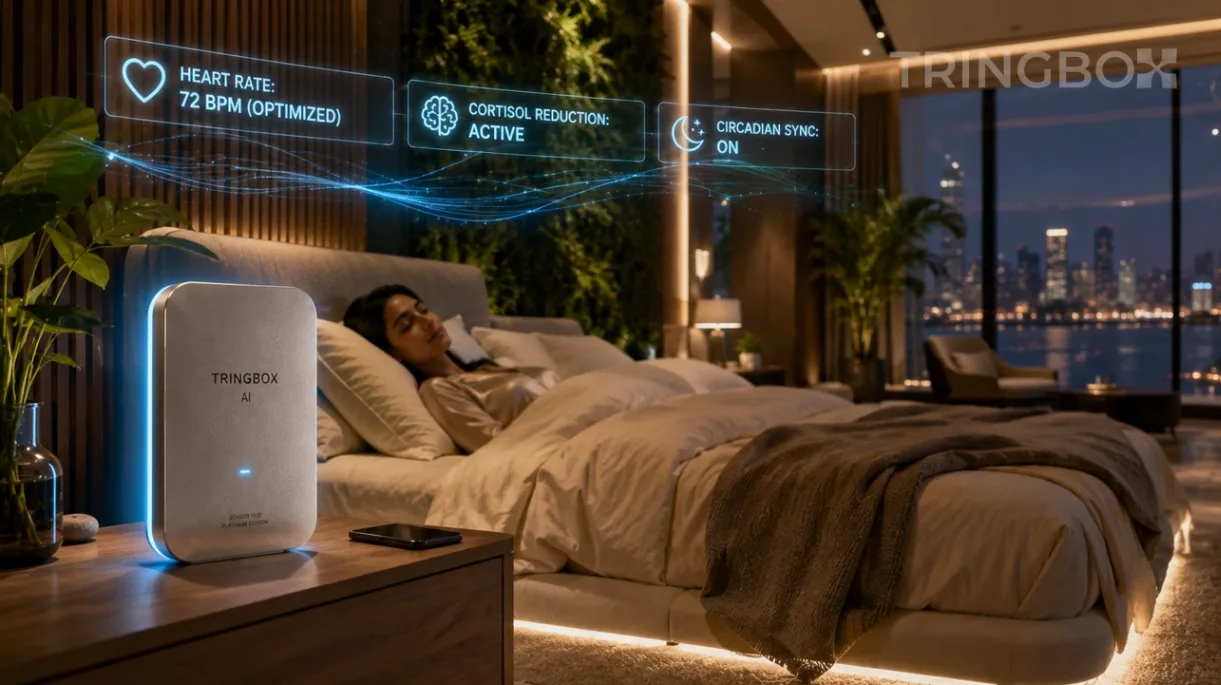
In May 2026, the global definition of health has fundamentally shifted. The industry is moving away from a reactive model treating illness after it occurs toward a proactive, hyper-personalized ecosystem of Predictive Wellness. With the 'over-optimization backlash' causing consumers to reject highly stressful, data-obsessed routines, the new focus is on gentle regulation, longevity, and emotional resilience. Consumers are leveraging advanced biometric wearables, stress-tracking environmental sensors, and neuro-technology to optimize their sleep, nutrition, and nervous systems long before burnout hits.
This paradigm shift is not restricted to the home gym; it is radically redesigning the hospitality sector, corporate workspaces, and commercial environments. Brands must now design 'Third Places' that actively heal and regulate human biology. Discover how the convergence of predictive data, circadian environmental design, and Tringbox Agentic AI is architecting the wellness sanctuaries of the future.
1. Wearables & Longevity Tech: The Data-Driven Human
2. Neurowellness: Regulating the Nervous System
3. Wellness Ecosystems in Hospitality: The Hotel as a Sanctuary
4. Recharge Workspaces: Designing the Corporate Retreat
5. Sensory Integration: Tringbox and the 72 BPM Baseline
6. FAQs: Implementing Predictive Wellness Environments
A: Reactive wellness treats symptoms after they occur (e.g., taking medication for a headache). Predictive wellness uses continuous biometric and environmental data to identify stressors and optimize habits to prevent the symptom from ever occurring.
A: High-frequency noises and chaotic rhythms trigger a cortisol response. By deploying grounding 72 BPM tempos and warm harmonic textures, systems like Tringbox force the brain into a parasympathetic 'rest and digest' state, physically lowering the listener's heart rate.
A: Yes. Advanced smart rooms use passive sensors to track sleep stages. As the guest transitions toward waking, the room can automatically trigger circadian lighting and a gradual, soothing acoustic crescendo to wake them without the shock of an alarm.
A: Consumers and employees are suffering from severe digital burnout and sensory overload. They are actively seeking out 'Third Places' that provide relief and regulation. Spaces that fail to provide acoustic comfort will simply be avoided by this highly lucrative demographic.
Conclusion
The rise of Predictive Wellness in 2026 is a fundamental rewiring of how we interact with our biology and our physical environments. As longevity tech and emotional analytics become mainstream, consumers demand that the spaces they visit from luxury hotels to modern corporate offices actively support their healthspan. Visual aesthetics alone are no longer enough; the environment must be an intelligent, multi-sensory sanctuary. By integrating systems like Tringbox Agentic AI, forward-thinking brands can seamlessly regulate the nervous systems of their guests, turning stress-inducing public spaces into restorative, revenue-driving havens. Book your Tringbox demo today and start architecting the future of preventive health.
Recommended for you
The 'Cute Tech' Explosion: Why Gen Z Demands Emotional Hardware and How Retailers Must Adapt in 2026
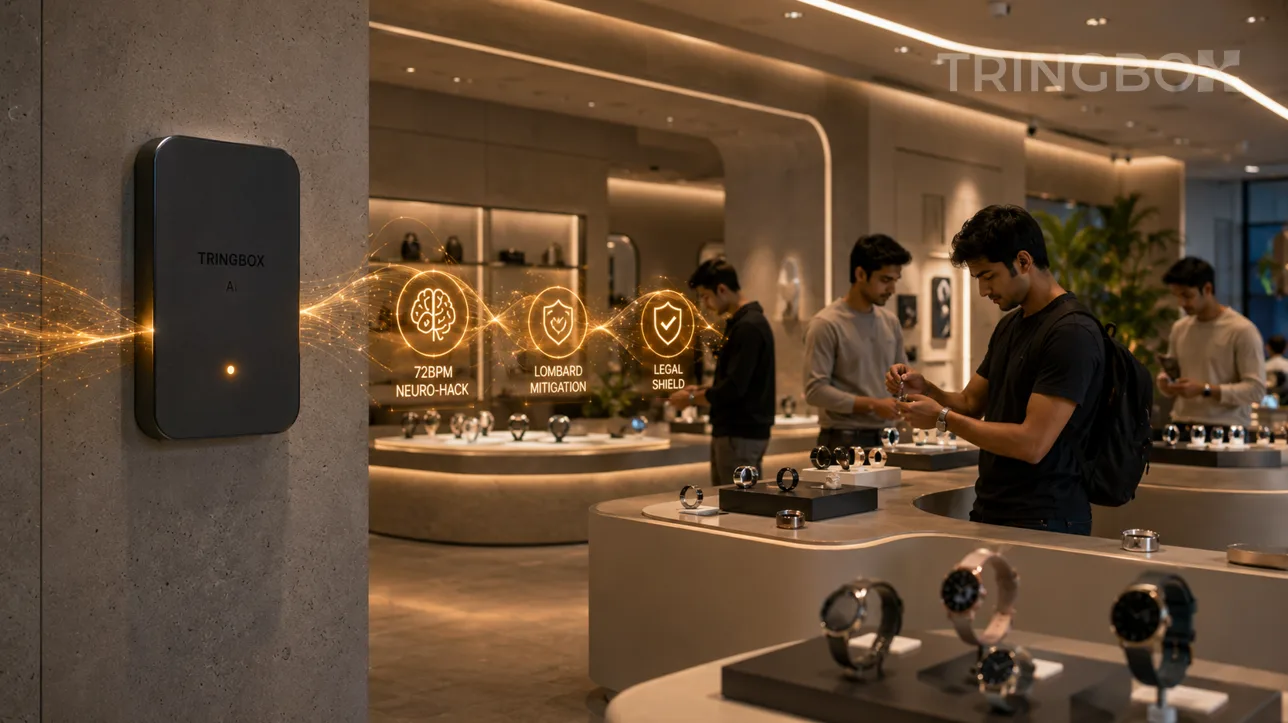
In May 2026, the consumer electronics sector is undergoing a massive aesthetic and psychological pivot. Technology products are no longer marketed purely on processing power or battery life; they have evolved into fashion statements and emotional accessories. This phenomenon widely dubbed 'Cute Tech' sees Gen Z consumers forming deep emotional attachments to AI wearables, pastel smart rings, and designer over-ear headphones.
However, selling emotionally driven hardware requires a completely different environmental strategy than selling sterile computing equipment. The traditional consumer electronics showroom, historically characterized by harsh fluorescent lighting and disjointed, aggressive background noise, is fatal to the 'Cute Tech' aesthetic. To monetize this demographic shift, retailers must transform their physical spaces into immersive, fashion-forward boutiques. Discover how enterprise electronics brands are deploying Tringbox Agentic AI to engineer hyper-targeted sensory environments, utilizing biometric audio and advanced legal compliance to bridge the gap between silicon hardware and human emotion.
Weather-Responsive Commerce: How Predictive AI and Sensory Architecture Drive Retail in 2026
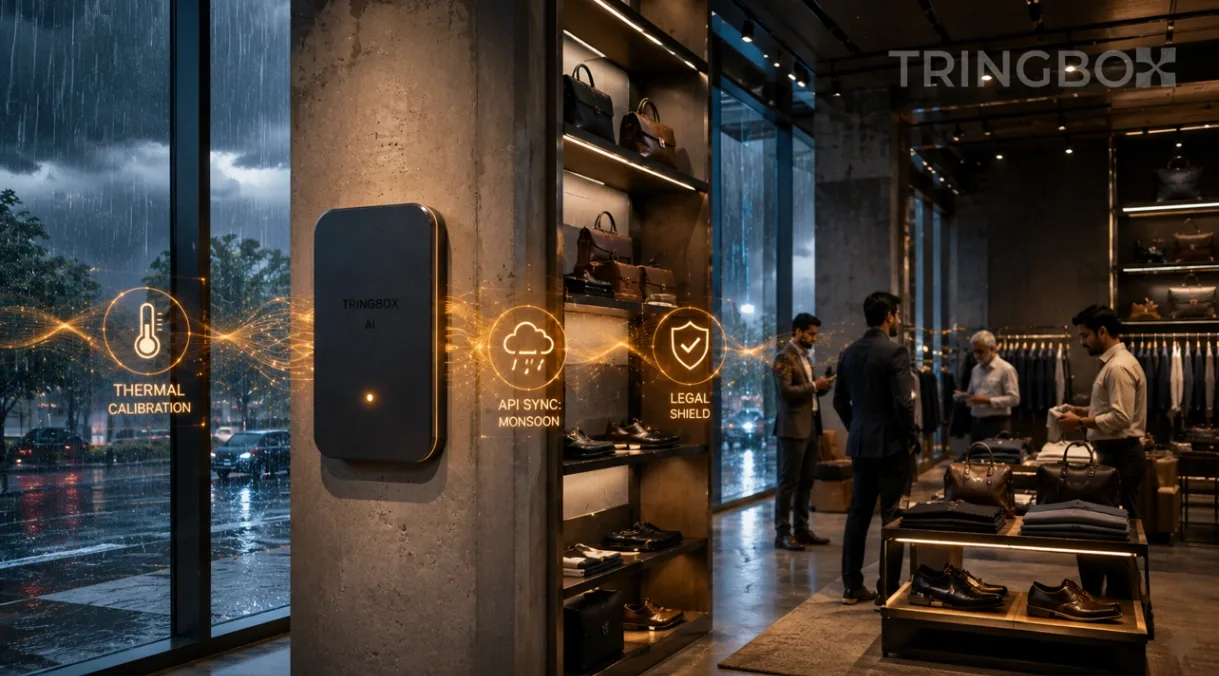
In May 2026, extreme climatic shifts are no longer just meteorological events; they are the primary architects of spontaneous consumer behavior. Across the Indian subcontinent, a sudden pre-monsoon downpour in Mumbai or an intense, dry heatwave in Delhi fundamentally alters foot traffic patterns, purchasing stamina, and baseline emotional states within minutes.
Historically, retail and hospitality venues operated as static environments offering the exact same lighting, temperature, and auditory experience regardless of the chaos happening outside their doors. Today, this rigidity is a massive operational failure. The industry has aggressively pivoted toward Weather-Responsive Commerce. By deploying predictive retail systems and edge-computing sensor networks, spaces autonomously adapt their sensory output to counteract external climatic stressors. Discover how leading brands are utilizing Tringbox Agentic AI to seamlessly integrate live weather APIs with acoustic engineering turning environmental friction into extended dwell time, deep cognitive comfort, and protected commercial revenue.
The Future of Commercial Music Licensing: Navigating Copyright Risks and Automated Compliance Systems
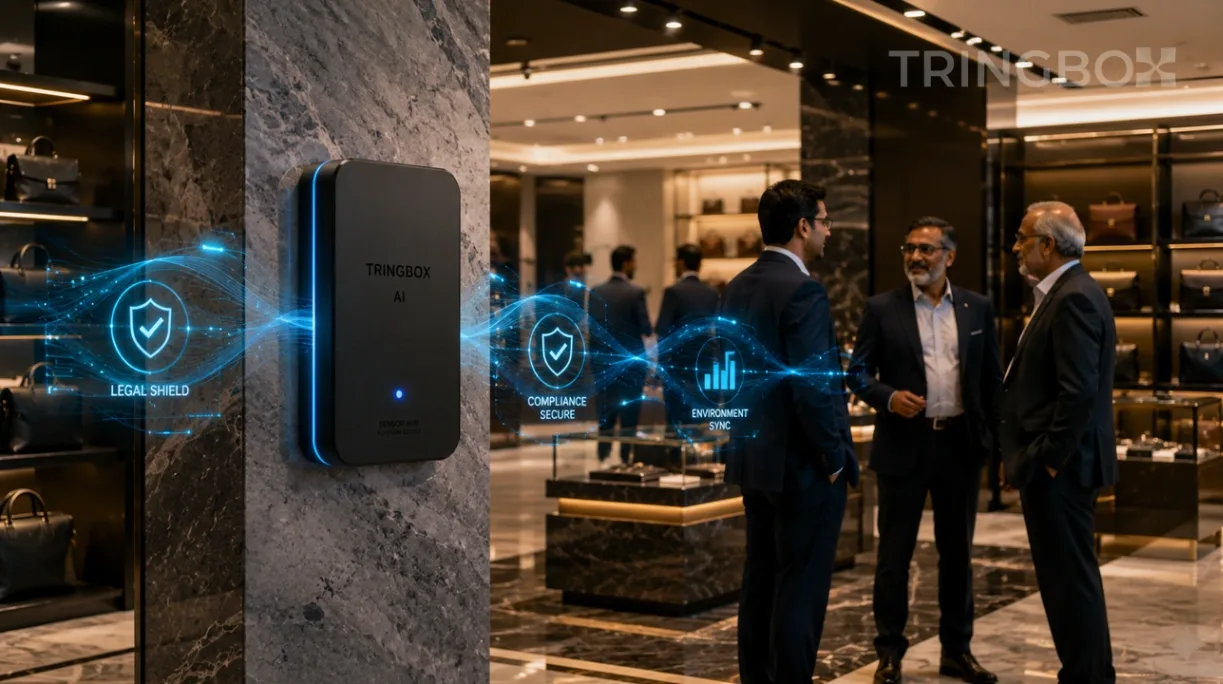
The commercial real estate and retail landscape in May 2026 faces an unprecedented legal crunch. Corporate operators can no longer treat background audio as an afterthought or a minor operational utility.
As regulatory bodies globally and locally intensify their audit frameworks, traditional shortcuts ranging from standard consumer streaming accounts to gray-market royalty-free lists are collapsing under legal scrutiny. Physical commercial spaces are increasingly exposed to catastrophic copyright litigation, copyright trolling, and massive statutory penalties. This comprehensive deep dive examines how smart brands are trading vulnerable manual processes for automated compliance networks, ensuring absolute indemnification while turning music into an optimized environmental software asset powered by Tringbox Agentic AI.
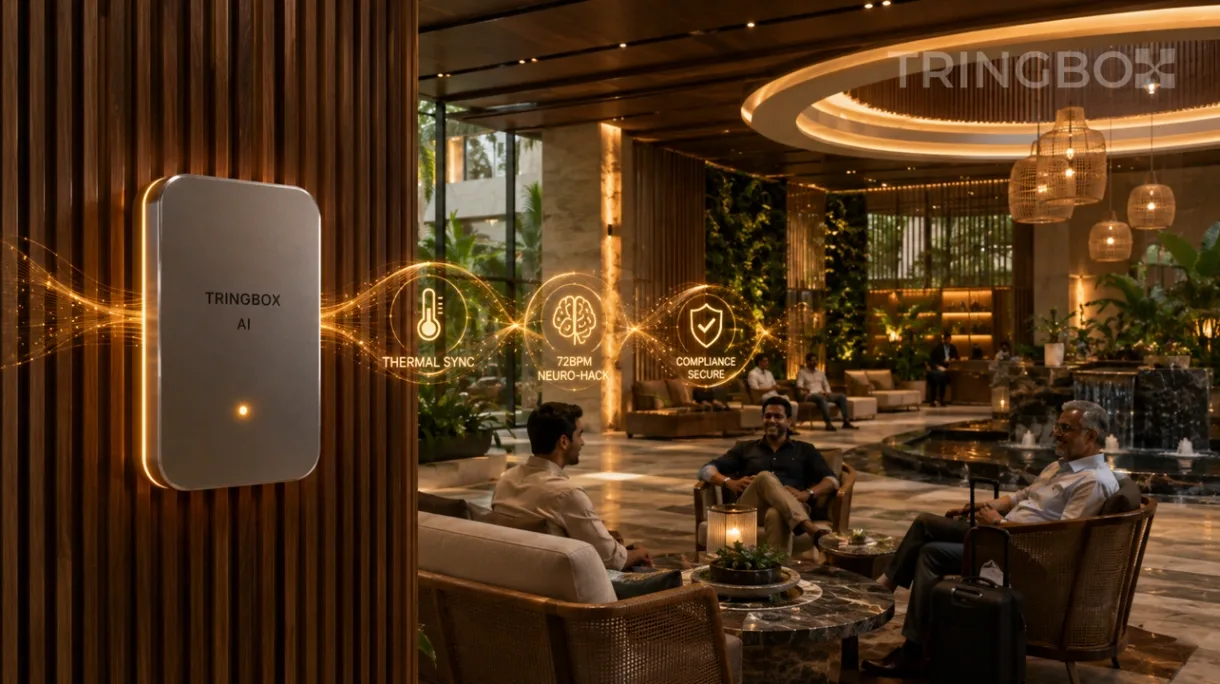
The Data-Driven Guest Journey: How AI and Sensory Architecture are Rewiring Luxury Hospitality in 2026
In May 2026, the luxury hospitality playbook has undergone a fundamental paradigm shift. Impeccable service, high-thread-count linens, and Michelin-star room service are no longer competitive differentiators; they are baseline commodities. Today, elite hotel groups and wellness resorts compete on a far more complex metric: Emotional Memory. To engineer this, hospitality leaders are abandoning static operational models in favor of deep, data-driven sensory architecture.
Through the integration of environmental sensors, biometric feedback, and Agentic AI, modern hotels are optimizing scent, sound, and thermal dynamics in real-time to create hyper-personalized guest journeys. The lobbies, transit corridors, and fine-dining spaces of 2026 operate as responsive, living ecosystems. At the core of this transformation is the deployment of autonomous sensory infrastructure, such as the Tringbox Agentic AI engine. By systematically replacing disjointed background playlists with dynamically engineered acoustic environments, hospitality brands are physically lowering guest cortisol levels, syncing with live environmental variables, and ensuring bulletproof corporate legal compliance on a global scale.
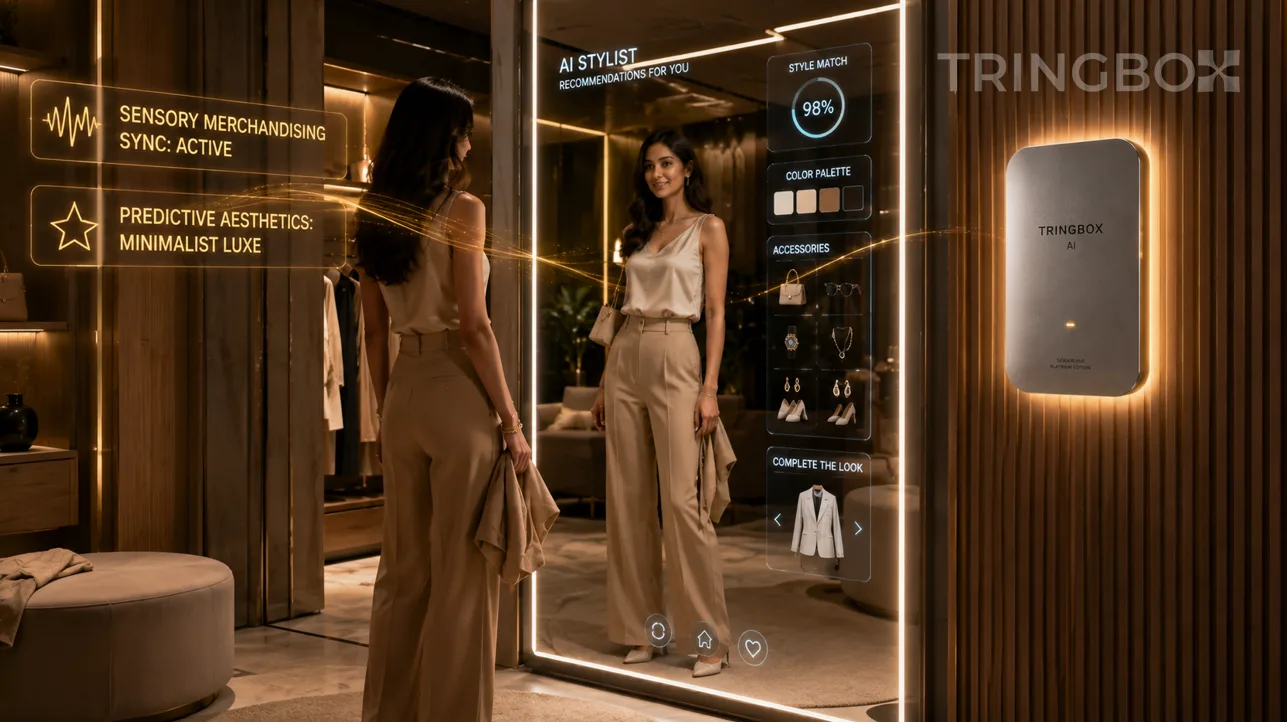
The AI Boutique: How Agentic Tech is Rewiring Fashion Retail & Visual Merchandising in 2026
In May 2026, the physical fashion boutique has matured beyond a mere point of transaction; it has become an intelligent, responsive ecosystem. As consumer expectations for hyper-personalization collide with breakthroughs in Agentic AI, fashion brands are realizing that static mannequins and seasonal lookbooks are no longer sufficient. Today, the most successful brands are deploying technology that actively anticipates aesthetic shifts, customizes the fitting room experience, and dynamically alters the store's visual and auditory environment in real-time.
From AI-generated styling algorithms and interactive smart mirrors to automated visual merchandising and predictive trend modeling, data is now the primary fabric of modern retail. But as visual merchandising becomes smarter, the sensory environment must evolve to match it. A store with a cutting-edge smart mirror but a generic, repetitive background playlist creates massive cognitive dissonance. Discover how luxury and high-street brands are leveraging data to predict aesthetics, personalize recommendations, and utilize platforms like Tringbox Agentic AI to ensure their auditory environment perfectly mirrors their visual innovation.
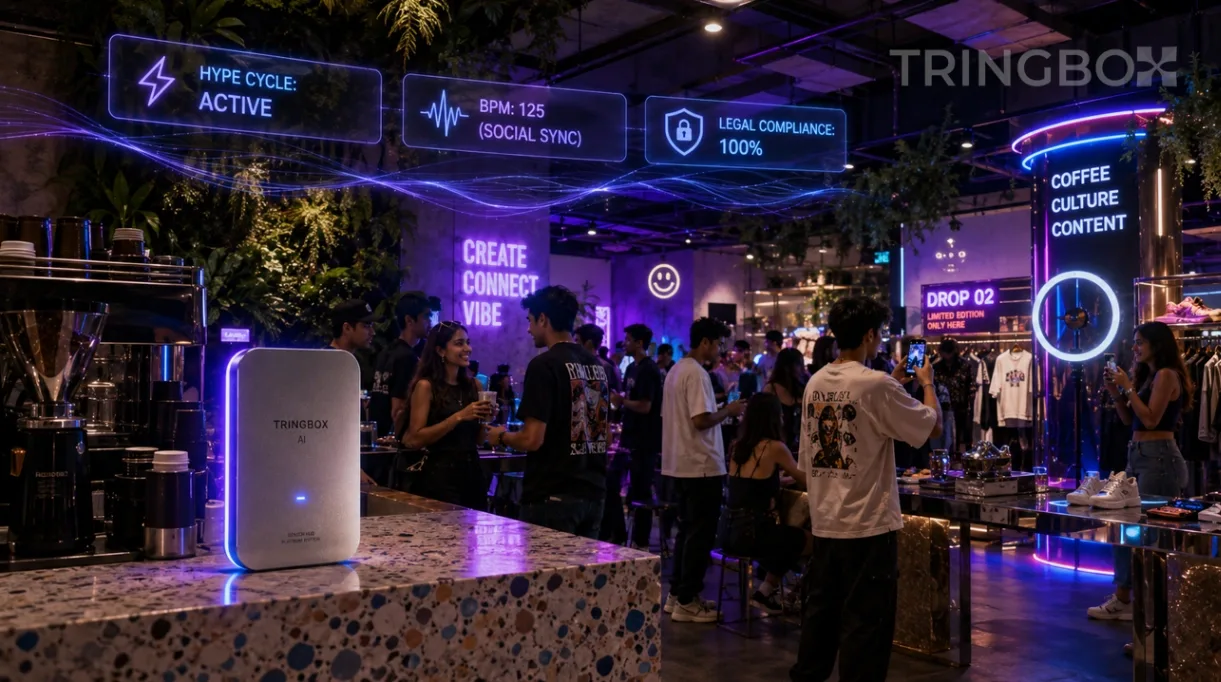
Why Gen Z Wants 'Experiences Over Ownership': Architecting the 2026 Retail Shift
In May 2026, the traditional retail playbook is obsolete. A profound generational shift has occurred: Gen Z (and increasingly, younger Millennials) are actively rejecting the accumulation of physical 'things' in favor of acquiring 'memories.' This is the absolute apex of the Experience Economy. Whether in global hubs like London and New York, or surging Indian metropolises like Bengaluru, Hyderabad, and Pune, the data is unequivocal Gen Z allocates a significantly higher percentage of their disposable income toward travel, dining, live events, and immersive pop-ups than any previous generation.
This shift fundamentally redefines what a 'store' or a 'cafe' must be. Physical spaces can no longer function merely as points of transaction; they must serve as communal hubs, aesthetic backdrops, and sensory experiences. If your venue is just selling a product, you are competing on price and convenience a battle Amazon won a decade ago. To capture the hyper-lucrative Gen Z demographic, brands must pivot to Immersive Retail. This guide explores the psychology of emotional spending, the rise of creator-led events, and how platforms like Tringbox Agentic AI provide the essential sensory infrastructure to make these experiences unforgettable.
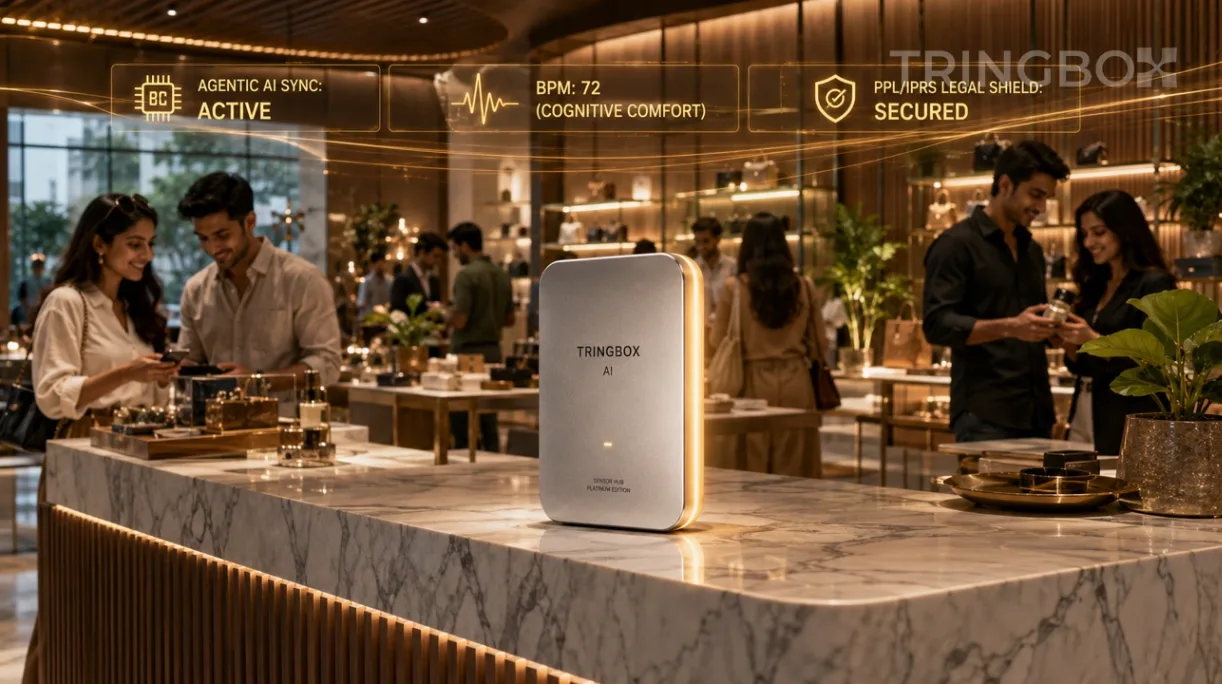
India’s Premium Consumer Shift in 2026: Architecting the Experiential Economy
In 2026, the narrative of the Indian consumer has been irrevocably rewritten. The market has moved decisively past the era of mass-market utility and pure price sensitivity. India is currently witnessing a structural wave of premiumization, with the luxury and accessible-luxury markets projected to cross $14 Billion this year. A new demographic of 'HENRYs' (High Earners, Not Rich Yet), DINKs (Dual Income, No Kids), and highly aspirational Gen-Z consumers are actively rejecting the mundane. They are reallocating their vast disposable incomes toward premium experiences, wellness sanctuaries, luxury cafes, and smart retail environments.
However, the most disruptive element of this 2026 shift is geography. The premiumization story is no longer confined to the boardrooms and high streets of Delhi, Mumbai, or Bengaluru. The ultimate growth engines are Tier-2 and Tier-3 cities like Lucknow, Indore, Chandigarh, and Surat, which now account for over 50% of new luxury demand. As global and domestic brands rush to capture this affluent audience, visual aesthetics alone are failing to drive loyalty. The modern Indian consumer demands absolute sensory perfection. To win this demographic, businesses must converge luxury with technology, utilizing platforms like Tringbox Agentic AI to deliver hyper-personalized, context-aware acoustic architecture that matches their premium expectations.
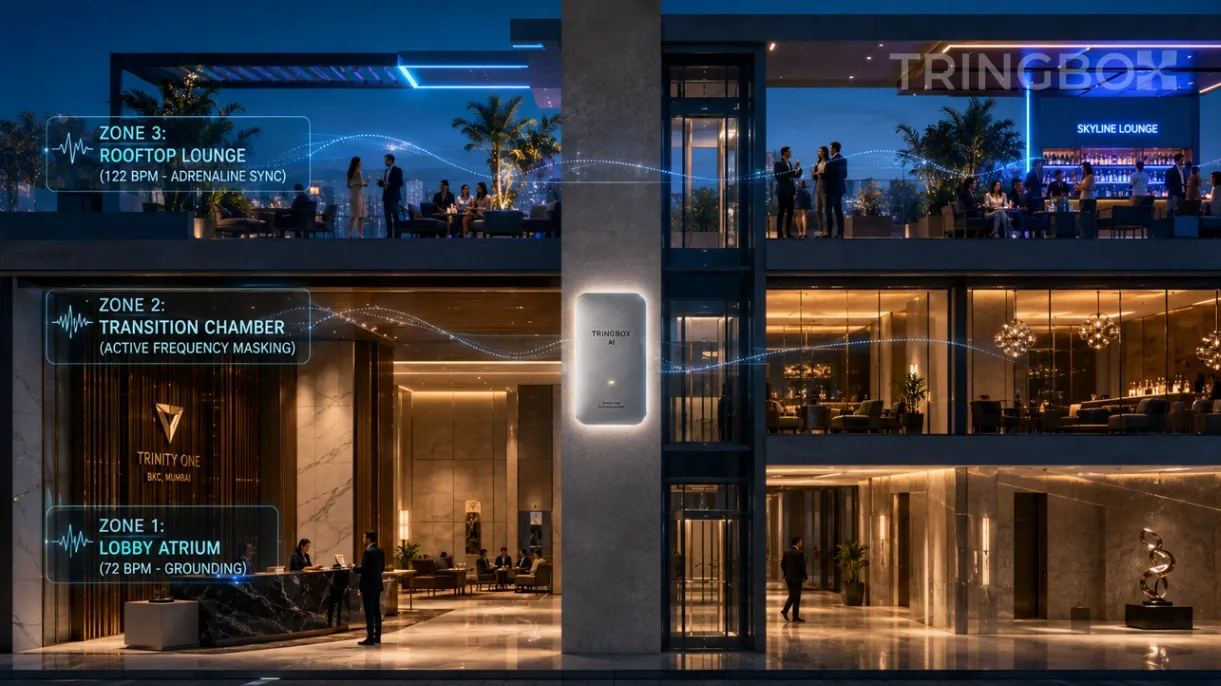
Sonic Zoning for Multi-Use Public Spaces: Lobbies, Elevators, Rooftops (Scalable with Tringbox)
In the luxury real estate, hospitality, and premium commercial sectors of May 2026, architectural design is no longer limited to visual geometry. Modern public spaces are complex, fluid ecosystems where a single square footage can house multiple human behaviors simultaneously. A guest experiences a structural journey: transitioning from the grand tranquility of a reception lobby, passing through the enclosed compression of an elevator, and emerging into the high-energy social pulse of a rooftop lounge. This spatial progression requires a corresponding auditory evolution. Broadcasting a single, uniform audio feed across these distinct micro-climates is an operational failure that creates immediate cognitive friction.
To maximize spatial utility and protect brand equity, enterprise operators deploy sonic zoning. This technical discipline treats sound as a physical material, segmenting mixed-use venues into distinct acoustic fields that independently manipulate human pacing and emotion. By deploying a hardware-integrated multi-zone music system driven by Tringbox Agentic AI, corporate entities can eliminate acoustic spill, automate temporal energy curves, and enforce brand-safe compliance across hundreds of vertical zones simultaneously. This guide delivers the precise mathematical and psychological parameters required to deploy in-store music for public spaces across multi-use real estate portfolios.
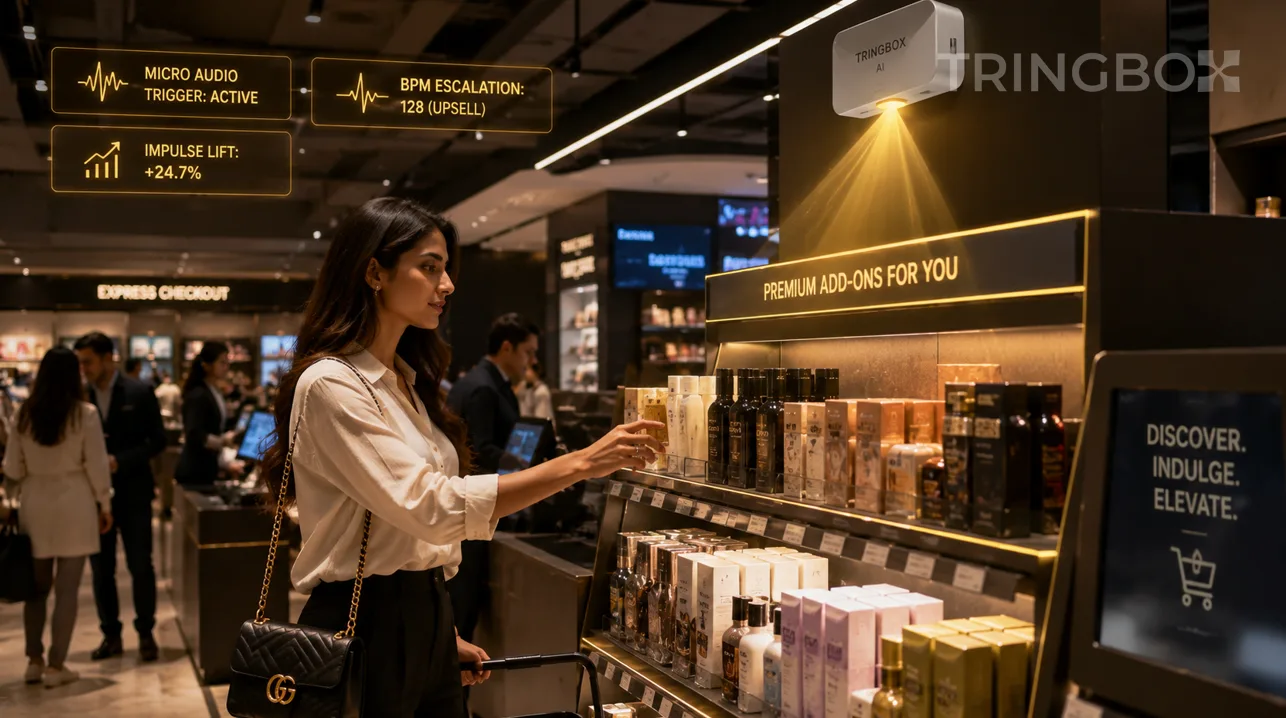
Micro-Moment Audio: 8–12 Second Hooks That Drive Add-on Sales (A/B Tests + Tringbox Implementation)
In the highly optimized physical retail corridors of May 2026, enterprise operators have recognized that long-form environmental soundscapes are only the first layer of sensory branding. While a continuous, grounding 72 BPM background track is exceptional for keeping customers relaxed and extending overall dwell time, it is fundamentally passive. It establishes the baseline comfort of the venue, but it does not actively convert a browsing guest into an immediate impulse buyer at the final point of sale. As modern consumer attention spans continue to fragment, retail engineering must adapt to the micro-moments those critical 10-second windows where a shopper decides to grab a premium add-on item, upgrade their beverage order, or select an impulse product at the checkout counter.
To capitalize on these high-margin windows, leading brands are moving past static background sound and deploying micro audio hooks. These are highly engineered, ultra-short auditory interventions lasting between 8 to 12 seconds that serve as a psychological 'pattern interrupt' inside the store. By utilizing hardware-integrated instore audio triggers driven by Tringbox Agentic AI, retail spaces can now execute real-time, localized audio shifts that smash through consumer decision fatigue and drive massive statistical lifts in average transaction value (ATV). This technical guide breaks down the psychoacoustic science, the A/B test methodologies, and the step-by-step Tringbox deployment architecture required to master micro-moment revenue generation.
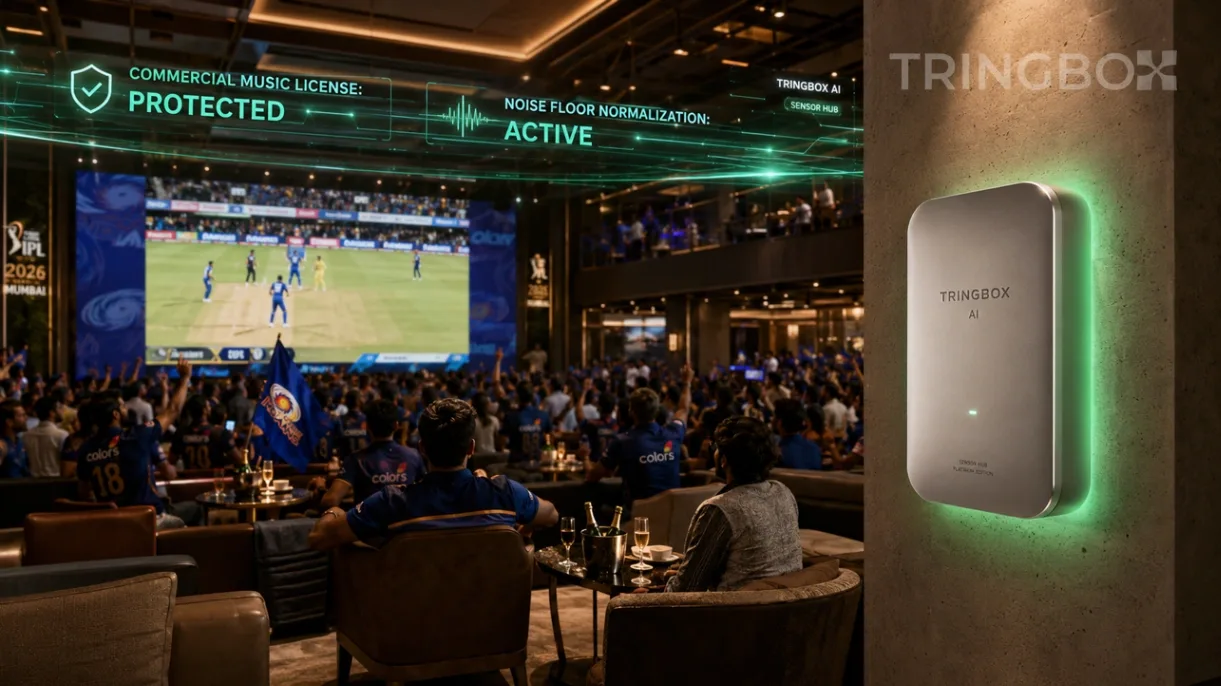
IPL Licensing Crisis: What Every Pub Owner Must Know (PPL/IPRS Checklist + Tringbox Fix)
The May 2026 IPL season is driving historic footfall into Indian sports bars, pubs, and cafes. Screening matches has become the primary revenue engine for the hospitality sector this quarter. However, a major legal storm is unfolding off the pitch. Performing rights organizations (PROs) have launched an unprecedented nationwide enforcement campaign targeting commercial establishments. Multiple high-profile venues have already been slapped with sudden court injunctions and fines reaching up to ₹5 Lakh for playing unauthorized music during match screenings.
Many pub owners operate under the dangerous assumption that having a commercial DTH connection or a broadcasting license for the video feed automatically covers the audio. This is a critical legal error. To survive this season without crippling legal penalties, venues must achieve absolute PPL IPRS compliance. This comprehensive guide provides a practical compliance checklist for a commercial music license in India and reveals how Tringbox Agentic AI acts as an automated shield filtering out illegal tracks while serving fully compliant, high-energy alternatives that mimic a live stadium atmosphere.
Trusted by Industry Leaders
Recognized by leading innovative platforms

NVIDIA Inception
AI Innovation Program

MongoDB for Startups
Database & Infrastructure Support

AWS Startups
Cloud Computing Resources

Salesforce for Startups
Business Growth Platform
Trusted by Industry Leaders
Recognized and backed by the world's most innovative platforms
NVIDIA Inception
AI Innovation Program

Zoho for Startups
Startup Growth Support

DPIIT Startup India
Government Recognized Startup
MongoDB for Startups
Database Support Program
AWS Startups
Cloud & Scaling Support
Salesforce for Startups
Business Growth Platform
What is Tringbox InStore AI Music
Tringbox InStore AI Music is a smart music system for shops, cafes, offices, gyms, and public spaces. Instead of playing the same playlist every day, it automatically plays the right music based on what is happening in your space at that moment. You don't need to change anything, music adjusts on its own.
What Tringbox Does
Real Time Environment Reading
Understands what customers emotionally need at every moment
Automatic Music Selection
Continuously adapting the perfect soundtrack throughout the day
Effortless Ambience
No playlists, no manual switching, no guesswork just magic
What is Tringbox InStore AI Music
Tringbox InStore AI Music is a smart music system for shops, cafes, offices, gyms, and public spaces. Instead of playing the same playlist every day, it automatically plays the right music based on what is happening in your space at that moment. You don't need to change anything, music adjusts on its own.
Live Context
Environmental Sensors
AI Engine
Neural Processing
Music Metrics
Audio Analysis
Instruments
Neuro Output
Brain Chemistry
Discover Your Perfect Ambiance
Tringbox Adapts Perfectly to any Venue type
No venues found for ""
Research & Evidence
Science Behind Tringbox
Neuroscience research on soundscapes
Dwell Time
More browsing
Lower BPM music triggers dopamine release.
Perception
Premium feel
Familiar harmonics enhance trust.
Experience
Repeat visits
Oxytocin release creates familiarity.
Conversion
Impulse buys
Dopamine improves reward anticipation.
Research & Evidence
The Science Behind Tringbox
Decades of peer-reviewed neuroscience research proves how engineered soundscapes influence human behavior and drive measurable business outcomes.
Dwell Time
Customers browse longer
Lower BPM music triggers dopamine release, keeping customers comfortable enough to stay longer without realizing why.
Perception
Premium brand feel
Familiar harmonic structures increase serotonin, reducing decision stress and enhancing trust in your brand.
Experience
Higher repeat visits
Oxytocin release through emotionally safe soundscapes creates subconscious familiarity and comfort.
Conversion
Impulse purchases up
Dopamine elevation improves reward anticipation and reduces friction during decision making.
How to Get Started
Transform your venue in 4 simple steps
Subscribe to Tringbox
Choose a plan and activate your subscription
Share Your Store Details
Our team helps you in a quick onboarding call
AI Training (Upto 72 Hrs)
We tune the engine specifically for your brand
Login & Play
No hardware needed. Works on any device.
How to Get Started
Transform your venue's atmosphere in four simple steps. No complex setup, no hardware required.
Subscribe to Tringbox
Choose a plan and activate your subscription
Share Your Store Details
Our team helps you in a quick onboarding call
AI Training (Upto 72 Hrs)
We tune the engine specifically for your brand
Login & Play
No hardware needed. Works on any device.
How Tringbox is Different
Adaptive music for any environment
Yes
No
No
Yes
No
Yes
No
Yes
Limited
Yes
Yes
No
Limited
300K+
No hardware. No setup. No friction.
How Tringbox is Different
Intelligent music that reads your environment and delivers the perfect soundtrack.
Yes
No
No
Yes
No
Yes
No
Yes
Limited
Yes
Yes
No
Limited tracks
300,000+ tracks
This reads like SaaS, not audio. No hardware. No setup. No friction.